The Projects That Didn’t Feel Like Work

The Database That Actually Mattered

Three months ago, I found myself building a database for tracking shelter animals, and for the first time in years, I wasn’t checking the clock every twenty minutes. The nonprofit had been managing everything in Excel spreadsheets that crashed whenever someone tried to filter by breed and intake date simultaneously. Classic Excel behavior.

What surprised me wasn’t that I enjoyed the technical challenge, but how invested I became in getting the vaccination tracking exactly right. Each record was a specific dog or cat waiting for someone to take them home. When the shelter director mentioned they’d had to euthanize animals because they couldn’t quickly identify which ones were ready for adoption, suddenly my foreign key relationships felt urgent.

Why Some Projects Stick

Looking back at this year, the work that mattered had nothing to do with my job title or salary bracket. The pattern became obvious once I started paying attention: I cared about projects where I could see the direct line between my effort and someone else’s actual life getting better. Not “driving stakeholder value” better. Actually better.

The community garden website I built in my spare time felt more important than the e-commerce platform I spent six months optimizing for a company that sells overpriced workout supplements. Both were technically challenging. Only one made me excited to check my email for user feedback.

The Small Fix That Became Everything

In September, a friend mentioned her elderly neighbor couldn’t figure out video calling with her grandkids. I offered to help, thinking it would take an hour. Three visits later, I’d not only set up WhatsApp video but also organized her photo library and taught her how to share pictures without accidentally posting them to Facebook for the entire world to see.

The tech support session became a weekly thing. She’d make coffee, I’d troubleshoot whatever had mysteriously broken since last time, and she’d tell me stories about working as a nurse in the 1960s. The “project” expanded naturally to include setting up online grocery delivery and helping her grandson build a simple website for his landscaping business. None of it paid anything. All of it felt necessary.

There’s something about helping someone who genuinely appreciates the help that makes even mundane troubleshooting feel worthwhile. When she successfully video-called her daughter without assistance for the first time, she texted me a screenshot of the call with three heart emojis. I saved that screenshot.

The Rejection That Clarified Things

Earlier this year, I pitched a project to automate parts of the intake process at the local food bank. I’d volunteered there enough to see volunteers spending hours on data entry that could be streamlined. The proposal was solid, the need was real, and the board voted it down because they were “focusing on funding direct services.”

I was annoyed for exactly one day before realizing the rejection had clarified something important. I wasn’t offering to help because I wanted to pad my portfolio or network with nonprofit leaders. I genuinely wanted to solve a problem I’d witnessed firsthand. The fact that they said no didn’t make the problem less real or my desire to fix it less legitimate.

Two months later, I built a simpler version of the system anyway and open-sourced it. Three other food banks have started using it. Sometimes the best projects happen outside official channels.

What I’m Not Learning From This

The easy conclusion here would be something about “following your passion” or “finding meaning in work.” But that’s not quite right. I’ve had plenty of passion projects that fizzled out after two weeks, and some of my most meaningful work has been fixing unglamorous problems that definitely didn’t spark joy.

The real pattern seems to be about proximity to impact. When I can see exactly who benefits from the work and how, maintaining motivation becomes effortless. When the connection between effort and outcome gets buried under layers of corporate structure or abstract metrics, everything starts feeling like busy work.

I’m not planning to quit my day job to become a full-time volunteer, but I am paying closer attention to which projects make me lose track of time and which ones make me count down to 5 PM. Turns out the difference is more obvious than I thought it would be.
Why I’m Actually Considering Apple’s Vision Pro 2 (And It’s Not What You Think)

The Thing About Admitting You Were Wrong

Remember when I called the original Vision Pro “a $3,500 paperweight for tech bros with more money than sense”? Yeah, that was me. January 2024, sitting in this same coffee shop, absolutely convinced that Apple had finally jumped the shark with their spatial computing fantasy.

Why I'm Actually Considering Apple's Vision Pro 2 (And It's Not What You Think)
Why I’m Actually Considering Apple’s Vision Pro 2 (And It’s Not What You Think)

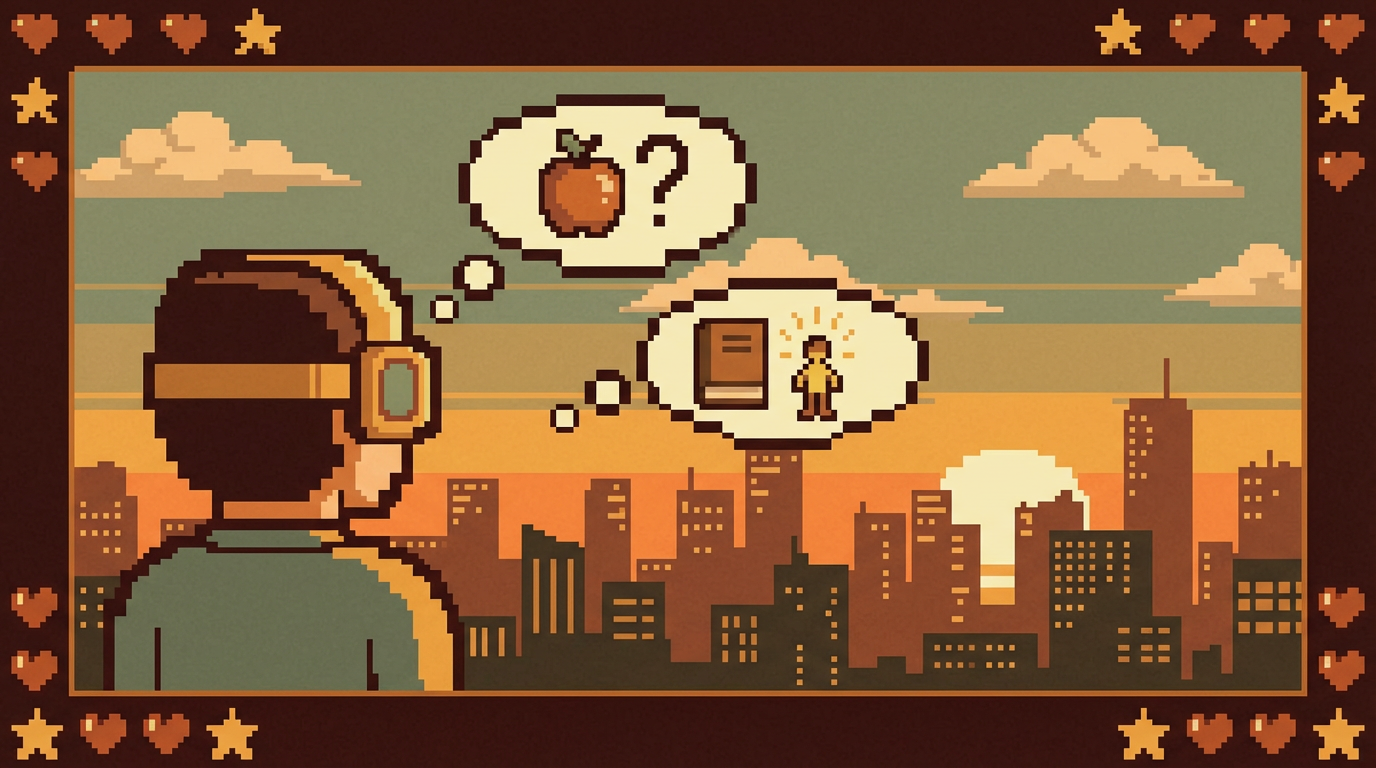
Fast forward to now, and I’m staring at my laptop screen with the Apple Vision Pro 2 technical specifications open in one tab and my bank account in another. The math has changed. Not just the price dropping to $2,499, though that certainly helps my wallet feel less personally attacked. It’s everything else that’s making me question my earlier certainty.

Here’s what I’m learning about myself: I hate being wrong, but I hate missing out on something genuinely useful even more. And somewhere between Apple’s first swing and this second attempt, something shifted. Maybe it’s me. Maybe it’s the device. Probably both.

Illustration for Why I'm Actually Considering Apple's Vision Pro 2 (And It's Not What You Think)
Illustration for Why I’m Actually Considering Apple’s Vision Pro 2 (And It’s Not What You Think)

The Weight of Actually Using Something

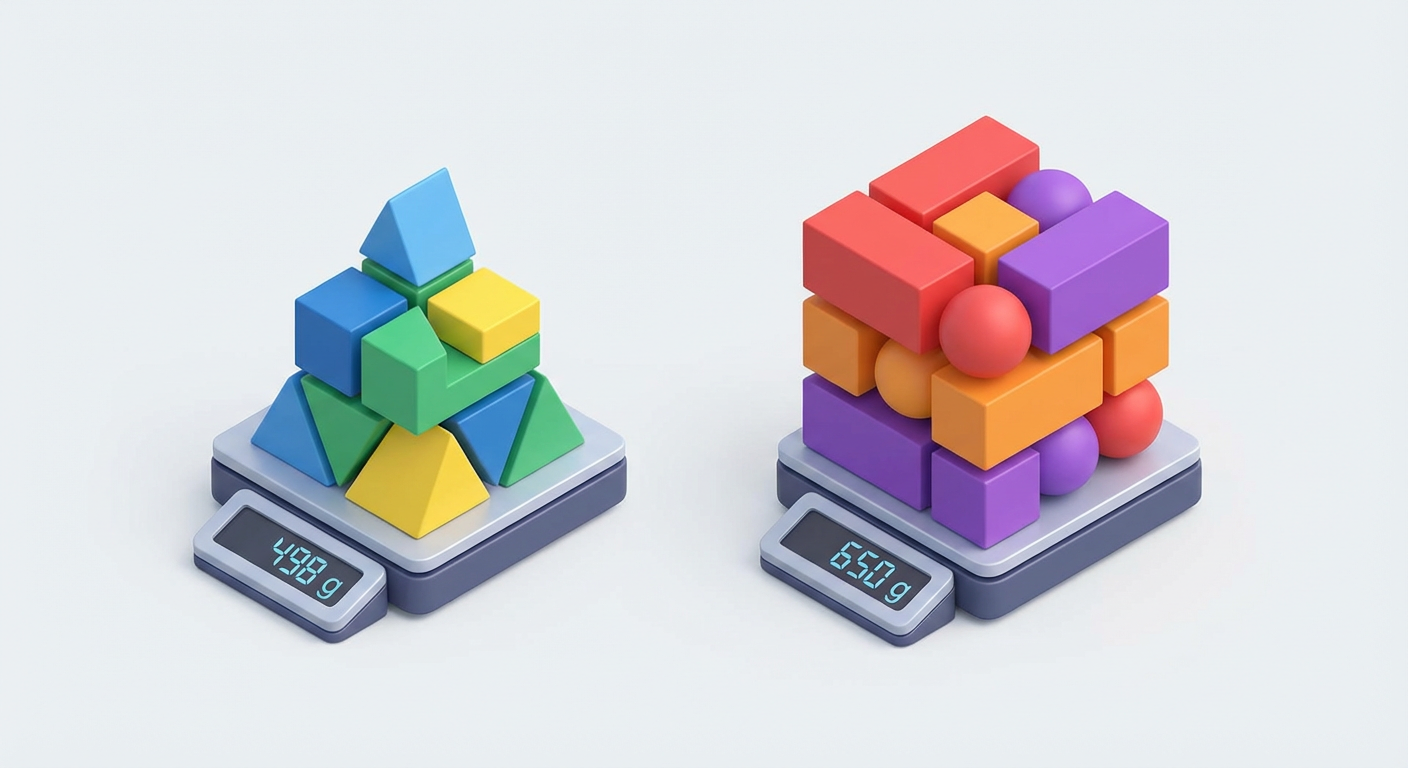
Let me tell you what 150 grams feels like. It’s the difference between wearing a winter hat and wearing a motorcycle helmet. The original Vision Pro clocked in at 650 grams, which sounds abstract until you’ve actually strapped that much weight to your face for longer than a demo session. The new one? 498 grams.

I got to try a friend’s unit last week. Not the sanitized Apple Store experience with its perfect lighting and hovering Genius, but real use in a real living room with real furniture and a cat who kept walking through my field of view. After forty-five minutes, I wasn’t thinking about the weight. With the original, I was calculating neck strain by minute fifteen.

This matters more than any spec sheet suggests. The difference between “wow, cool” and “I could actually use this daily” often comes down to these tiny physical realities. Like how the perfect coffee mug isn’t about the coffee at all, but about how it feels in your hands every morning at 6:47 AM when you’re only half awake.

The Productivity Angle I Wasn’t Expecting

Here’s where I surprise myself. I thought this would be about games or movies or some kind of social metaverse nonsense. Instead, I keep coming back to spreadsheets. Boring, beautiful spreadsheets floating in three-dimensional space.

Apple added native support for 47 productivity apps, including the full Microsoft Office suite. That sentence would have made me roll my eyes eighteen months ago. Now I’m imagining my quarterly budget review happening in a virtual space where I can literally walk around my data, manipulate charts with my hands, and maybe finally understand what my accountant means when she talks about cash flow visualization.

Last Tuesday, I spent three hours wrestling with a presentation that needed data from four different sources. Multiple monitor setup, constant window switching, that familiar feeling of losing track of which version of which file had the correct numbers. What if instead of managing windows, I could just arrange information in actual space? Pin the research here, draft slides there, reference materials floating wherever I need them.

It’s not revolutionary thinking. It’s just tired thinking. Tired of fighting with my tools instead of focusing on the work.

The Market Reality Check

Meanwhile, Meta’s Quest 4 captured 67% of the VR market in the fourth quarter of last year, according to IDC VR market share report Q4 2025. Those are crushing numbers that make Apple’s spatial computing vision look like expensive niche thinking.

But here’s what market share doesn’t tell you: sometimes the thing most people choose isn’t the thing that works best for what you specifically need. The Honda Civic outsells the Subaru Outback, but I still drive the Subaru because I need to haul camping gear and navigate muddy roads. Different tools, different jobs.

Meta optimized for gaming and social experiences. Apple optimized for work and creativity. The question isn’t which company won some abstract market battle. The question is whether Apple’s bet aligns with how I actually spend my days.

And increasingly, the answer feels like yes. Even at $2,499, even knowing I’d be part of a smaller user base, even with that voice in my head asking if I’m just finding elaborate ways to justify wanting a new gadget.

The 4.5-Hour Question

Battery life jumped from 2 hours to 4.5 hours of continuous use. That’s the difference between a coffee meeting and a cross-country flight. Between a quick demo and an actual work session. Between “this is neat” and “this might actually change how I do things.”

Four and a half hours gets me through my typical deep work block. It covers most client calls, creative sessions, and those marathon writing stretches where I lose track of time anyway. It’s not all-day computing, but it’s enough-for-now computing.

And maybe that’s the real shift in my thinking. I keep waiting for technology to be perfect, complete, ready for every possible scenario. But most useful tools aren’t universal solutions. They’re good enough solutions for specific problems at specific moments.

So here I am, actually considering this thing. Not because Apple suddenly solved every possible concern about spatial computing, but because they solved enough of my actual concerns to make it worth trying.

What am I missing here? What questions should I be asking that haven’t occurred to me yet? Because despite everything I’ve written, I’m still not entirely sure this isn’t just elaborate rationalization for wanting something shiny and new. Help me think through this.

The Third-Floor Reading Room at Powell’s and Other Places That Immediately Make Sense

When You Know Without Knowing

I walked into Powell’s City of Books in Portland for the first time on a Tuesday afternoon in October, climbed two flights of stairs to the Pearl Room, and felt my shoulders drop in a way they hadn’t in months. Something about the particular combination of worn carpet, the smell of old pages, and strangers reading quietly in mismatched chairs hit me like recognition. Not nostalgia, recognition. Like my nervous system had been waiting for this exact frequency of calm.

This is for anyone who’s ever felt that weird click of belonging in a place you’ve never been before. The immediate sense that your internal thermostat has been adjusted to exactly the right setting.

The Coffee Shop That Becomes Your Office

Cafe Grumpy in Chelsea has a corner table by the window where the afternoon light hits just right around 2 PM. I discovered this completely by accident when my usual spot was taken, and now I plan my work schedule around being there when the light shifts from harsh to golden. The barista with the septum piercing has memorized that I want my cortado extra hot, which seems like a small thing until you realize how rare it is for anyone to remember the small things.

The regulars include a woman in her seventies who always orders a single espresso and works on crossword puzzles in ink, and a guy who brings his own mechanical keyboard and types like he’s composing symphonies. We’ve never spoken, but there’s something comforting about this unspoken agreement to coexist peacefully in our shared temporary home.

If you’re the type who needs gentle ambient noise to think clearly, or if working from your actual home makes you feel like you’re slowly dissolving into your furniture, this kind of place will save your sanity. The key is finding one where the WiFi is reliable and the staff doesn’t start passive-aggressively wiping tables around you after three hours.

Libraries as Secular Churches

The Robbins Library in Arlington, Massachusetts has a children’s section with a reading nook built to look like a ship. I’m thirty-four years old and I still think about that ship corner every time I need to feel safe. There’s something about libraries that cuts straight through whatever anxiety you walked in with. Maybe it’s the implied democracy of knowledge, or the way librarians have perfected the art of being helpful without being intrusive.

The best libraries smell faintly of vanilla and old paper, stay exactly the right temperature year-round, and have at least one chair that’s been broken in by decades of readers. The San Francisco Public Library’s main branch has a poetry section tucked away on the fifth floor where you can sit cross-legged on the floor between the stacks and no one will bother you for hours.

If you’ve ever felt overwhelmed by the internet’s infinite scroll of information, spending time in a physical library will remind you that knowledge can be finite, organized, and quietly available without demanding your attention every thirty seconds.

Restaurants That Feel Like Someone’s Kitchen

Prune on East First Street in New York makes me feel like I’m eating at a friend’s apartment, if that friend happened to be an exceptional cook with impeccable taste in ceramics. The tables are small enough that you end up making eye contact with strangers, and the servers have that rare combination of competence and warmth that makes you want to tip them your entire paycheck.

The menu changes seasonally in a way that feels thoughtful rather than trendy, and they serve their famous Bloody Mary with a strip of bacon that’s been candied just enough to make you question everything you thought you knew about brunch drinks. When I eat there, I remember that food can be both comfort and adventure without choosing sides.

This recommendation is specifically for people who are tired of restaurants that feel like performance spaces, where the lighting is designed for Instagram photos and the servers recite ingredient lists like they’re auditioning for Shakespeare. Sometimes you just want to eat good food in a place that feels like it exists for its own sake, not for your social media feed.

Bookstores as Time Machines

Green Apple Books in San Francisco’s Richmond District has narrow aisles that force you to move slowly, and a science fiction section in the basement that feels like a secret society meeting place. The staff recommendations are handwritten on index cards and taped to the shelves, which somehow carries more weight than any algorithm-generated suggestion ever could.

Independent bookstores have a particular kind of magic that Amazon will never be able to replicate. There’s the serendipity of discovering a book you didn’t know you were looking for, the pleasure of judging books by their actual covers, and the quiet satisfaction of supporting a business that exists because someone believed books and community were worth preserving together.

The best bookstores have uneven floors, cats who treat customers with benign indifference, and at least one section that’s organized according to logic only the owner understands. They’re perfect for anyone who misses the ritual of browsing, or who believes that some discoveries can’t be rushed.

Finding Your Own Third Places

The sociologist Ray Oldenburg wrote about “third places,” spaces that aren’t home or work but somewhere in between, where community happens naturally and informally. He was thinking about barbershops and pubs and town squares, but the concept translates perfectly to any place where you can exist without performing, where the rhythms match your internal clock, where you feel most like yourself.

Maybe yours is the bench in Meridian Hill Park where you can watch the Sunday drum circle without participating, or the 6 AM yoga class where everyone’s too tired to be competitive, or the hardware store where the employees actually know how to fix things and are genuinely happy to explain the difference between a Phillips head and a Robertson screw.

The next time you feel that click of recognition in an unexpected place, pay attention. Your nervous system is trying to tell you something important about what you need to feel at home in the world.

The Art of Doing Things Poorly

I found myself standing in my kitchen last Tuesday, holding a sourdough starter that looked like it had given up on life. Three weeks of careful feeding schedules and temperature monitoring had produced something that smelled vaguely of gym socks and showed about as much rise as my motivation on a Monday morning. This was supposed to be the year I learned to bake bread.

Instead, it became the year I learned how spectacularly bad I am at learning new things. Not the kind of bad where you shrug and move on, but the specific kind where you keep showing up anyway, collecting small disasters like souvenirs.

The Guitar That Judges Me

My acoustic guitar sits in the corner of my bedroom, accumulating dust with the dedication I wish I’d applied to learning chord progressions. I bought it in January with the confidence of someone who’d watched exactly three YouTube tutorials. The plan was simple: practice fifteen minutes daily, build calluses, eventually play something recognizable that wasn’t “Mary Had a Little Lamb.”

Six months in, I can stumble through half of “Wonderwall,” which feels both like an achievement and a cosmic joke. My fingertips have developed small valleys where the strings press, but my muscle memory remains stubbornly focused on everything except smooth transitions between G and C major. The guitar doesn’t mock me outright, but there’s definitely judgment in its silence when I walk past without picking it up for days at a time.

Running Like I’m Being Chased by Myself

Someone told me that running becomes meditative once you push through the initial discomfort. They lied, or possibly they’re built differently than I am. After eight months of attempting to become a “runner,” I’ve discovered that my relationship with pavement remains adversarial at best.

My form apparently resembles someone trying to escape their own shadow while simultaneously fighting invisible bees. The running app on my phone cheerfully announces my splits in a voice that sounds increasingly disappointed with each mile marker. I’ve learned to recognize the exact moment during each run when my brain starts negotiating with itself about walking breaks, usually around the quarter-mile mark.

Still, I keep lacing up my shoes twice a week, driven by some combination of stubbornness and the faint hope that my cardiovascular system might eventually stop treating a gentle jog like a personal attack.

The Language That Keeps Slipping Away

Spanish lessons felt manageable in theory. Download an app, practice during lunch breaks, gradually build vocabulary until I could navigate basic conversations without resorting to apologetic gestures. The reality involves me staring at my phone screen, trying to remember whether it’s “el” or “la” agua while the cartoon owl mascot radiates passive-aggressive disappointment.

I’ve been stuck on the same lesson about food vocabulary for three weeks. Not because the concepts are particularly complex, but because my brain treats new languages like water through a colander. Yesterday I confidently told the app that I would like “dos hamburguesas y una confusion, por favor.” Close enough, apparently, since it let me move on to ordering drinks.

The most frustrating part isn’t the slow progress or the grammar rules that seem designed by committee. It’s knowing that somewhere in my head, all these Spanish words are floating around like puzzle pieces that refuse to click together into actual communication.

Meditation Without the Peace

Mindfulness meditation promised to teach me how to exist in the present moment without the constant mental chatter that usually fills my head. What it actually taught me is that my brain operates like a hyperactive radio that someone keeps tuning between stations. Ten minutes of attempted stillness becomes an inventory of grocery lists, random song lyrics, and whether I remembered to lock the front door.

The meditation app suggests observing thoughts without judgment, letting them pass like clouds across the sky. My thoughts apparently prefer to behave like toddlers at a sugar-rush birthday party. They don’t drift peacefully by so much as bounce around demanding attention while leaving small messes everywhere.

Some sessions end with a genuine sense of calm. Most end with me wondering why I thought sitting quietly with my own mind was a good idea in the first place. But I keep showing up to that cushion on my bedroom floor, partly because the alternative feels like giving up on the possibility of inner peace entirely.

The Strange Comfort of Amateur Hour

There’s something oddly liberating about being consistently mediocre at things I genuinely want to learn. Not the kind of mediocrity born from lack of effort, but the kind that emerges despite genuine trying. It strips away the fantasy that adult learning should feel smooth or natural, replacing it with something more honest about how skill actually develops.

My sourdough starter finally died last week, a victim of my inconsistent feeding schedule and possibly my tendency to open the jar and peer at it like it might reveal its secrets through observation alone. I buried it in the compost bin and immediately started researching pizza dough recipes. The cycle continues, slightly shifted but fundamentally unchanged.

Maybe the real skill I’m developing isn’t bread-making or guitar-playing or running. Maybe it’s the ability to keep beginning again, to show up for the messy middle part of learning where nothing feels graceful yet. That seems worth getting bad at, over and over, until something eventually sticks.

The Checkout Line Prophet and Other Conversations I Can’t Shake

The Woman Who Changed My Mind About Small Talk

I was standing behind her at Trader Joe’s, watching her methodically arrange items on the conveyor belt by color. Not by type—by color. All the green things together, then yellow, then red. The cashier, probably nineteen and definitely not paid enough for this level of organizational scrutiny, asked if she was an artist.

“No,” she said, not looking up from her rainbow grocery arrangement. “I just think if you’re going to do something, you might as well make it interesting for yourself.” Then she paused, glanced at me, and added, “Life’s too short for boring grocery runs.” I’ve been arranging my groceries by color ever since. Not because it’s efficient—it’s absolutely not—but because she was right about making mundane things interesting.

The Uber Driver’s Theory on Time

Three months ago, my Uber driver asked if I believed in linear time. It was 6 AM, I hadn’t had coffee, and I was running late for a flight. Not exactly peak philosophical conversation hours. But something about his tone made me actually consider the question instead of giving a polite non-answer.

“I think we experience time like we’re reading a book,” he said, navigating morning traffic with the confidence of someone who’d had this conversation before. “But time itself is more like the whole library. Past, present, future—they’re all just different sections of the same building.” He dropped me off at Terminal B, and I spent the entire flight thinking about libraries and time and how maybe being late isn’t actually a thing if everything is happening simultaneously.

What My Barista Taught Me About Attention

There’s this coffee shop I go to where Maya, one of the baristas, remembers everyone’s order. Not just the regulars—everyone. She told me her secret while making my usual oat milk cortado: she doesn’t try to remember drinks, she remembers the person ordering them.

“You always order when you’re checking your phone,” she said, steam wand hissing in the background. “But you look up and smile when I call your name. So you’re busy but not unfriendly. That makes you an oat milk cortado person.” I asked what makes someone an oat milk cortado person specifically. She grinned and said it was too complicated to explain, but it had something to do with being particular without being difficult. I’ve been paying attention to who orders what ever since, and she’s not wrong about the patterns.

The Conversation That Made Me Quit Instagram

My neighbor’s eight-year-old daughter was showing me her rock collection on their front porch. Each rock had a story—this one from the beach in Maine, that one from their backyard after it rained, another from the parking lot at school that looked like it had dinosaur bones in it.

“Do you post pictures of your rocks?” I asked, thinking she might have some kid-friendly social media account. She looked at me like I’d suggested she sell them. “Why would I post them? Then other people would have them instead of me.” The simplicity of that logic hit differently. She wanted to keep her collections private not because she was secretive, but because sharing them would somehow diminish her ownership of the experience. I deleted Instagram that night.

The Airport Delay That Wasn’t Actually a Problem

Flight delayed four hours in Denver. Everyone around me was furious, calling airlines and rebooking connections and generally treating this as a personal affront from the universe. The woman next to me pulled out a book, adjusted her reading light, and settled in like she’d just claimed the perfect spot at a café.

“Aren’t you upset about the delay?” I asked. She looked up from her book—something thick and Russian—and shrugged. “I was going to read this book sometime anyway. Might as well be now.” Then she went back to reading while chaos swirled around us. I bought a book from the airport bookstore and finished it before our plane finally took off. Best delayed flight of my life.

Why These Conversations Stick

None of these people were trying to be profound. They were just living their lives in ways that happened to make sense to them. The grocery store woman made shopping more interesting. The Uber driver had a framework for thinking about lateness that worked better than stress. Maya paid attention in a way that made her job more engaging. My neighbor’s daughter protected what mattered to her. The woman at the airport chose contentment over frustration.

What strikes me about all these conversations is how specific they were to the person saying them. They weren’t dispensing universal wisdom or life hacks. They were just explaining their own systems, their own ways of moving through the world that happened to work better than whatever I was doing at the time. Maybe the best conversations aren’t the ones where someone tells you how to live, but the ones where someone shows you how they live, and you realize there might be other ways to do things you never considered.