There is a particular kind of cold that does not ask to be solved. It arrives in late November, when the sun stays low and the snow has not yet learned to hold light. In that cold, a person can stand at the edge of a lake and feel the world withdrawing into itself. The problem is not that the cold is uncomfortable. The problem is that it has become difficult to think about cold without reaching for a thermostat, a heated glove, a weather app, a promise of optimisation. This is the problem with technological solutions to philosophical problems: they tend to replace the question with a control surface.
By a philosophical problem I mean something that cannot be resolved by more information or better engineering, because it is not primarily a deficit. It is a condition of being. The experience of cold, of darkness, of distance, of seasonal time—these are not failures of comfort. They are ways the world makes itself known. A technological solution, in the sense I want to examine, is any intervention that treats such conditions as obstacles to be removed, managed, or bypassed. The difficulty is not that technology is useless. It is that the solution often arrives before we have understood what the problem was asking of us.
This matters for anyone who lives in the North, but also for anyone who has felt the quiet pressure of a question that has no answer. The Finnish and Sámi philosophical traditions I work with are not anti-technological. They are, however, suspicious of the assumption that every difficulty is a defect. In the North, one learns early that some things cannot be fixed, only attended to. The question is whether our tools can attend with us, or whether they will insist on fixing what was never broken.
The Shape of a Philosophical Problem
A philosophical problem has a different texture from a technical one. A technical problem can be stated clearly: the bridge is too weak, the battery drains too quickly, the road is impassable in spring. A philosophical problem resists clear statement. It appears as a kind of unease, a sense that something is being lost even as something is gained. When we install electric lighting that erases the difference between noon and midnight, we solve a technical problem—the inconvenience of darkness—but we may also dissolve a philosophical one: the experience of darkness as a limit, a teacher, a season of the soul.
In the North, darkness is not simply the absence of light. It is a presence. It has weight, duration, and a kind of moral seriousness. The Sámi concept of seasons is not a calendar abstraction but a lived rhythm in which darkness and light, cold and thaw, are not opposites to be balanced but phases of a single breathing. When technology promises to make winter more like summer—through artificial light, heated walkways, climate-controlled interiors—it does not merely change the environment. It changes the meaning of winter. And meaning is not something that can be restored with a better app.
Technological Mediation and the Vanishing of Limits
The phenomenology of technological mediation, as developed by thinkers like Don Ihde and Peter-Paul Verbeek, helps us see that technologies are not neutral instruments. They shape how the world appears to us. A thermometer does not simply measure cold; it teaches us to experience cold as a number. A GPS device does not simply show the way; it teaches us to experience distance as a problem of navigation rather than a quality of the land. A smartphone does not simply connect us; it teaches us to experience solitude as a signal failure.
This is not a moral condemnation. It is a description of how perception works. Technologies amplify some aspects of the world and reduce others. The question is what happens when the amplified aspects are always the ones that can be controlled, measured, and optimised. What happens to the aspects that resist control—the cold that has no number, the darkness that has no switch, the distance that has no shortcut?
In the North, these resistant aspects are not marginal. They are the very substance of the world. The cold is not an inconvenience to be managed; it is a condition of the landscape, the animals, the memory of the place. The darkness is not a gap in the day; it is a season with its own intelligence. The distance between villages is not a problem of transport; it is a measure of solitude, of self-reliance, of the slow time of the land. When technological solutions arrive, they often treat these conditions as defects. And in doing so, they risk making the North into a place that is merely difficult, rather than a place that is meaningfully itself.
The Thermostat as a Philosophical Instrument
Consider the thermostat. It is a humble device, rarely noticed. Yet it embodies a whole philosophy of comfort. The thermostat assumes that the ideal temperature is a stable one, that the body should not have to notice the weather, that the difference between inside and outside is a problem to be solved. In a Northern winter, the thermostat creates a small summer in every room. It is a technological solution to the philosophical problem of cold.
But what is the philosophical problem of cold? It is not simply that cold is unpleasant. It is that cold is a limit. It reminds us that we are bodies, that we are mortal, that the world is larger and older than our preferences. Cold slows us down. It makes us attend to shelter, to fuel, to the needs of others. It creates a rhythm of work and rest that is not chosen but given. The thermostat, by removing the experience of cold, also removes the rhythm. It makes winter optional. And an optional winter is not a winter at all; it is a simulation of summer with a different date.
This is not an argument for suffering. It is an argument for attention. The question is not whether we should be cold, but whether we should notice the cold we have chosen to avoid. There is a difference between a warm room and a room that has forgotten the cold outside. The first is a shelter; the second is a denial. The first allows the cold to remain meaningful; the second treats it as an error in the system.
Darkness and the Light Switch
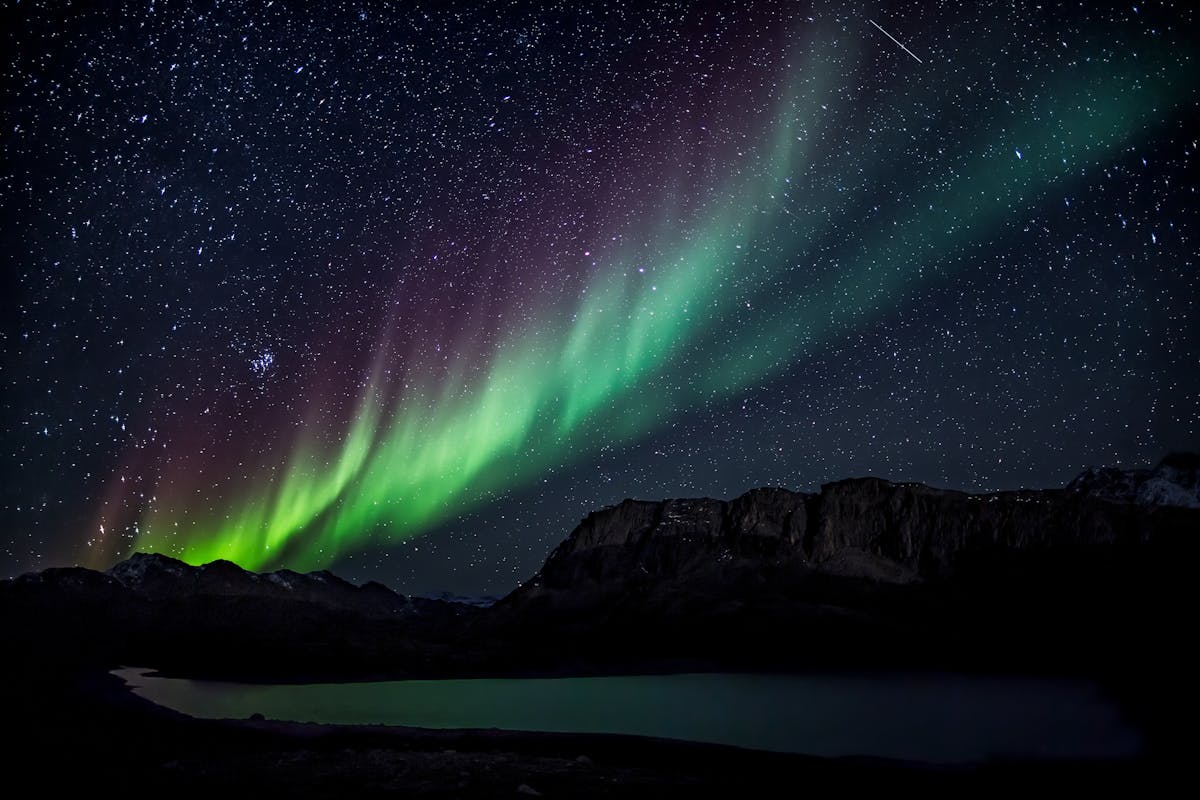
Darkness is another limit that technology has learned to erase. In the North, the polar night is not a brief inconvenience. It is a season that lasts for weeks, sometimes months. The sun does not rise. The world is lit by snow, by stars, by the aurora, by the faint glow of the horizon at noon. This darkness is not empty. It is full of sounds, of animal movements, of the slow breathing of the land. It is a time of stories, of rest, of inwardness.
Electric light changes all this. It makes the polar night optional. Streets are lit, windows glow, screens shine. The darkness is pushed to the edges, to the forests, to the lakes, to the places where no one has installed a lamp. This is a technological solution to the philosophical problem of darkness. But what is lost? The darkness itself, as a teacher. The experience of being a small creature in a large world. The knowledge that the sun will return, not because we have summoned it, but because the earth turns in its own time.
There is a grief in this loss, and it is a grief that technology cannot console. We can light our rooms, but we cannot light the memory of what darkness meant. We can extend the day, but we cannot extend the patience that darkness taught. The light switch is a small thing, but it carries a large philosophy: the belief that the world should be available to us at all times, in all seasons, without resistance. The North has always known otherwise.

Distance and the Promise of Speed
Distance is a third limit. In the North, distances are not measured in minutes but in landscapes. A journey of a hundred kilometres may cross forests, lakes, fells, and the territories of animals that have never seen a road. The distance is not a problem to be solved; it is a relationship to be lived. It takes time, and that time is not empty. It is filled with weather, with the changing light, with the slow accumulation of familiarity.
Modern transport promises to collapse this distance. A car, a snowmobile, a helicopter—each one makes the land smaller. The journey becomes a line between two points, and the land becomes a blur. This is a technological solution to the philosophical problem of distance. But distance, like cold and darkness, is a limit that teaches. It teaches patience. It teaches the difference between here and there. It teaches that some things cannot be reached quickly, and that the reaching is part of the meaning.
When distance is collapsed, the North becomes a network of points rather than a continuous land. The spaces between the points become empty, mere obstacles to be crossed. But those spaces are not empty. They are the habitat of reindeer, the memory of old paths, the silence that makes a place a place. The speed of the snowmobile does not simply save time; it erases the time that the land needs to be known.
The Lived Experience of Seasonal Time
Underlying all these limits is a deeper one: seasonal time. The North does not run on clock time. It runs on the slow turning of the year, on the return of the light, on the freezing and thawing of water, on the migrations of birds and reindeer. This time is not uniform. It speeds up in spring, slows down in winter, and sometimes seems to stop altogether in the deep cold of January. It is a time that cannot be optimised, because it is not a resource. It is a rhythm.
Technology often treats seasonal time as a problem. Artificial light extends the day. Heated greenhouses extend the growing season. Snowmobiles extend the range of travel. Each of these is a solution to the philosophical problem of living in a place where time is not under our control. But the solution comes at a cost. It teaches us to experience time as something to be managed, rather than something to be inhabited. It makes the seasons into obstacles, and the year into a series of problems to be solved.
In the Finnish tradition, there is a word for the quiet patience that seasonal time requires: sisu. It is often translated as determination or grit, but it is more than that. It is the ability to endure the unendurable, not by overcoming it, but by accepting it as part of the shape of life. Sisu is not a technological solution. It is a philosophical one, and it cannot be downloaded. It must be lived, season after season, in the cold and the dark and the distance.
What Technology Cannot Solve
The problem with technological solutions to philosophical problems is not that they fail. It is that they succeed too well. They remove the limit, and with it the meaning that the limit made possible. They make the cold optional, the darkness optional, the distance optional, the seasons optional. And in doing so, they make the North optional. A place that can be made comfortable is a place that can be left. A place that can be lit is a place that can be forgotten. A place that can be crossed quickly is a place that can be ignored.
This is not a call to abandon technology. It is a call to be more careful about what we ask technology to do. The question is not whether we should use a thermostat or a light switch or a snowmobile. The question is whether we can use them without forgetting what they replace. Can we keep the cold in our memory even as we warm our rooms? Can we keep the darkness in our stories even as we light our streets? Can we keep the distance in our bodies even as we cross the land quickly?
These are not technical questions. They are philosophical ones, and they require a different kind of attention. They require us to notice what is lost, to grieve it, and to wonder whether the loss was necessary. They require us to ask, not what technology can do, but what it should do, and what it should leave alone.
Attending to the World Without Fixing It
There is a way of being with the world that does not try to fix it. It is the way of the hunter who waits, the fisherman who watches the ice, the reindeer herder who follows the animals not because they are lost but because they know the way. This way is not passive. It is attentive. It is a form of care that does not require control. It is the opposite of the technological solution, not because it rejects technology, but because it refuses to let technology set the terms of the relationship.
In the North, this attentiveness is a survival skill. It is the ability to read the snow, to hear the change in the wind, to know when the ice is safe and when it is not. It is a knowledge that cannot be put into an app, because it is not information. It is a relationship. The ice does not send a notification. The wind does not update its status. The land speaks in a language that must be learned slowly, over years, in the body.
Technology can assist this attentiveness, but it cannot replace it. A weather forecast can tell us the temperature, but it cannot tell us how the cold feels on the skin, how it changes the sound of the forest, how it makes the reindeer move. A GPS can tell us where we are, but it cannot tell us what the place means, what has happened there, what the old names remember. The philosophical problem is not that we lack information. It is that we have forgotten how to attend.
The Grief and the Wonder
There is a grief in all this, and it is a grief that deserves to be named. It is the grief of losing the darkness, the cold, the distance, the slow time of the seasons. It is the grief of living in a world that is increasingly lit, heated, connected, and accelerated, and of knowing that something essential is slipping away. This grief is not despair. It is the appropriate response to a real loss. It is the recognition that the world is not made more meaningful by being made more convenient.
But there is also wonder. The same technology that erases the darkness can also reveal it. A camera can capture the aurora. A microphone can record the sound of the ice. A satellite can show the vastness of the North from above. These are not solutions to philosophical problems. They are invitations to attend. They can help us see what we are losing, and in seeing, to care for it. The wonder is not that technology can fix the world. The wonder is that the world remains unfixed, and that we can still be surprised by it.
The task, then, is not to choose between technology and the world. It is to hold them together in a way that does not let either one dominate. It is to use the thermostat without forgetting the cold. It is to turn on the light without forgetting the dark. It is to travel quickly without forgetting the distance. This is a difficult task, and it has no final solution. But it is the task that the North has always set for those who live there: to be in the world without trying to make it into something else.

Frequently Asked Questions
What is a philosophical problem, as opposed to a technical one?
A philosophical problem is a condition of being that cannot be resolved by more information or better engineering. It is not a deficit but a limit that gives shape to experience—such as cold, darkness, distance, or seasonal time. A technical problem, by contrast, can be stated clearly and solved with a tool or method. The confusion arises when we treat philosophical problems as if they were technical ones, and then wonder why the solution leaves us feeling empty.
Does this mean we should reject technology in the North?
No. The argument is not against technology but against the assumption that every difficulty is a defect to be removed. A thermostat, a light switch, or a snowmobile can be used with care, in a way that preserves the meaning of the cold, the darkness, or the distance. The question is whether we can use these tools without forgetting what they replace. Rejection is not the goal; attention is.
How can technology help us attend to the world rather than escape it?
Technology can help when it is used as an invitation to attention rather than a substitute for it. A camera can reveal the aurora, a microphone can record the sound of the ice, a satellite image can show the vastness of the land. These tools do not solve the philosophical problem; they make it more visible. The key is to use them in a way that deepens our relationship to the world, rather than replacing that relationship with a control surface.
What is the role of grief in this way of thinking?
Grief is the appropriate response to a real loss. When the darkness is lit away, the cold is heated away, and the distance is collapsed, something essential is lost. Naming that grief is not despair; it is honesty. It allows us to recognise what we are losing, and to ask whether the loss was necessary. Grief and wonder can coexist. The wonder is that the world remains unfixed, and that we can still be surprised by it.
A Next Step for This Site
This article is part of a longer inquiry into the phenomenology of technological mediation and ecological perception in the North. A natural next step is a closer look at the concept of sisu as a philosophical response to seasonal time, or a study of how Sámi reindeer herding practices embody a non-technological form of attention. I also plan to write about the sound of ice as a way of knowing the land, and about the difference between a map and a territory in Northern navigation. If these questions resonate, I invite you to sit with them in the cold, in the dark, in the distance, and to see what they ask of you.