The Tuesday Coffee Spoon and Other Anchors

The Spoon That Started It All

I have this small silver spoon with a curved handle that I use only for Tuesday morning coffee. Not Wednesday, not Monday. Tuesday. It sits in the drawer with the other utensils all week, but on Tuesday mornings I fish it out like I’m performing some minor sacrament.

This started completely by accident three years ago when I grabbed the wrong spoon from the dishwasher and my coffee tasted better. Or maybe I was just paying attention for once. Either way, I kept using it on Tuesdays, and now Tuesday feels incomplete without that particular weight in my hand, that specific clink against the ceramic mug.

The Art of Deliberate Pausing

Before I unlock my phone in the morning, I count to seven. Not five, not ten. Seven feels right in a way I can’t explain. It gives me just enough time to remember I’m a person who exists outside of notifications and other people’s emergencies.

Sometimes I forget and unlock immediately, muscle memory taking over. When I catch myself mid-scroll through whatever chaos is trending, I lock the phone and count anyway. It’s less about the counting and more about creating a small space where I get to choose what happens next.

My friend Sarah laughs at this, says it’s the most “you” thing she’s ever heard. She’s not wrong. But I’ve noticed she’s started doing her own version, taking three deep breaths before opening her laptop each morning.

Water Rituals and Kitchen Geography

I fill my water glass from the kitchen faucet, never the bathroom sink. This seems obvious until you’re working from home and the bathroom is three steps closer than the kitchen. But something about drinking water that came from where food happens makes it taste more intentional.

When I carry the glass back to my desk, I always pause at the window above the sink and look outside for exactly as long as it takes to drink three sips. Yesterday I watched a crow figure out how to open the neighbor’s garbage can lid. Two weeks ago it was rain hitting the maple tree in a way that looked like a natural percussion section.

These aren’t Instagram moments. They’re more like tiny deposits in some account I didn’t know I was keeping, where attention paid becomes something that pays me back later when I need to remember that interesting things are happening all the time.

The Evening Inventory

Before I brush my teeth, I touch three things in the bathroom and name them out loud. Tonight it was “toothbrush, hand towel, that tube of lip balm I keep forgetting to throw away.” It sounds ridiculous when I type it, but there’s something grounding about acknowledging the objects that surround me.

This started during a particularly anxious period when my brain felt like it was floating six inches above my head all the time. The simple act of naming real, physical things helped pull me back into my body, into the present moment, into the reality that I have hands and they can touch actual stuff.

Sometimes I name the same three things for weeks. Other times I pick randomly. The consistency isn’t in what I choose but in the choosing itself, the tiny moment of being present with my immediate physical world before transitioning into sleep.

What Makes a Ritual Stick

The rituals that last aren’t the ones I read about in productivity blogs or borrowed from meditation apps. They’re the weird, personal ones that evolved naturally from some random Tuesday when I happened to be paying attention. The Tuesday spoon works because Tuesday is my least favorite day of the week, and having one small thing that belongs only to Tuesday makes it feel less like a placeholder day.

I’ve tried to force rituals before. Morning pages, evening gratitude lists, elaborate tea ceremonies. They all felt like wearing someone else’s clothes. The ones that stick are smaller, stranger, more specific to how my particular brain works in my particular life.

My therapist calls them “micro-anchors,” these tiny repeated actions that create stability without feeling like work. I call them Tuesday spoons, because sometimes the most important thing about a ritual is that it makes no sense to anyone but you.

What small, inexplicable thing do you find yourself returning to? I’m genuinely curious about the rituals that choose us rather than the ones we choose. The ones that start by accident and stick around because they serve some need we didn’t know we had.

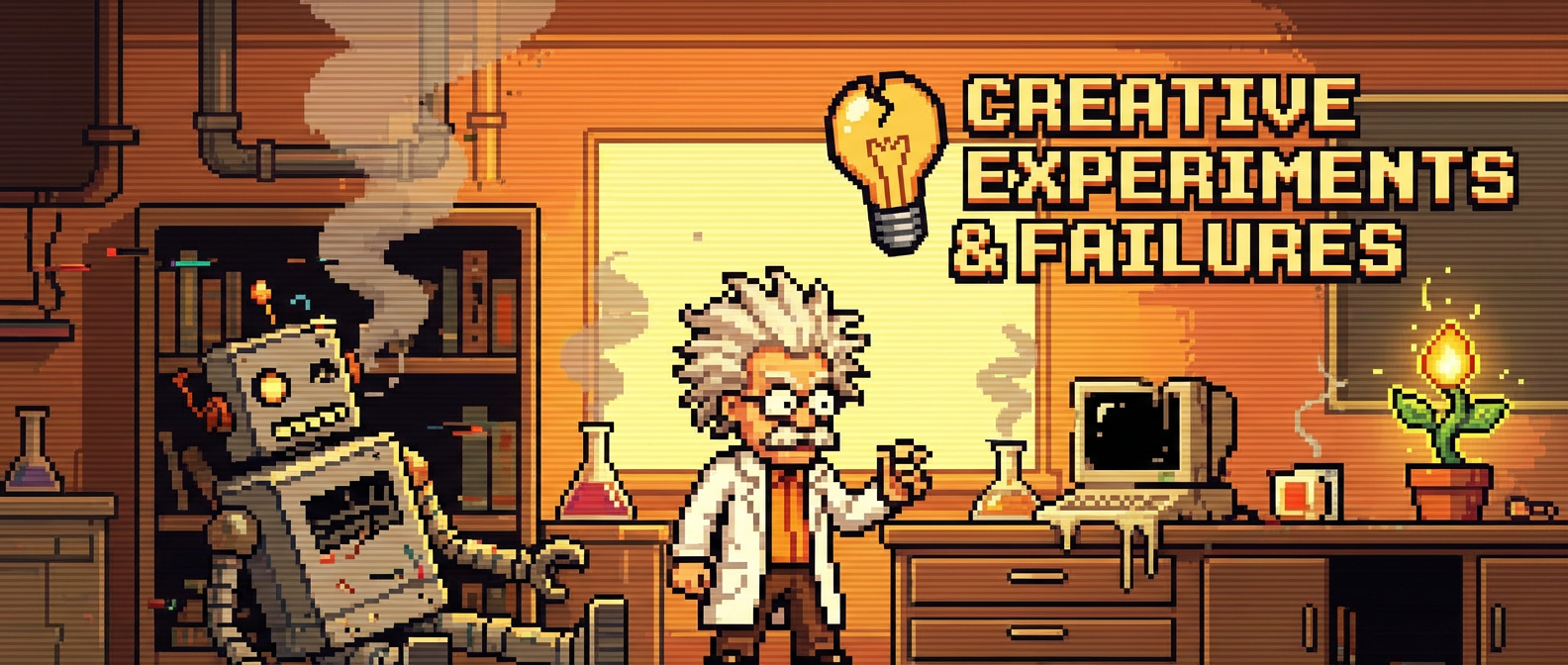
The Things That Didn’t Work (And Why I’m Glad They Didn’t)

The Pottery Wheel Conspiracy

I signed up for pottery classes in March with the kind of confidence that only comes from watching too many Instagram reels of centered clay spinning into perfect bowls. The studio smelled like wet earth and broken dreams. My instructor, Carol, had the patience of a saint and hands that could coax beauty from mud while mine seemed determined to create abstract sculptures that defied both physics and good taste.

The Things That Didn't Work (And Why I'm Glad They Didn't)
The Things That Didn’t Work (And Why I’m Glad They Didn’t)

The wheel and I never reached an understanding. Every piece I attempted looked like it had been shaped during a minor earthquake. My coffee mug had a handle that jutted out at a ninety-degree angle, making it impossible to drink from without significant wrist contortion. The bowl I made for my neighbor warped so dramatically during firing that it became more of a decorative taco shell.

But here’s what nobody tells you about pottery: the failed pieces teach you more than the successful ones ever could. I learned that clay has memory, that rushing leads to collapse, and that sometimes the best thing you can do is start over. These weren’t profound life metaphors at the time. They were just facts about clay that happened to apply to other things too.

Illustration for The Things That Didn't Work (And Why I'm Glad They Didn't)
Illustration for The Things That Didn’t Work (And Why I’m Glad They Didn’t)

The Great Sourdough Rebellion

My sourdough starter died three times this year. I named each one, which in retrospect seems unnecessarily dramatic. Gerald lasted two months before I forgot to feed him during a busy week at work. Beatrice succumbed to what I can only describe as a fuzzy green apocalypse. And poor Winston simply refused to rise, no matter how much I coaxed, pleaded, or threatened.

The online sourdough community is surprisingly intense about their fermentation schedules. People post photos of their starter bubbles with the kind of pride usually reserved for baby photos. I tried to keep up, documenting my feeding schedule and photographing the lackluster results, but my bread consistently emerged from the oven looking like it had given up on life halfway through baking.

The thing about sourdough is that it requires a kind of daily commitment I wasn’t prepared for. It’s like having a very high-maintenance pet that only eats flour and water and occasionally rewards you with mediocre bread. I respect the craft, but I’ve made peace with buying my bread from people who actually know what they’re doing.

Digital Painting and the Illusion of Control

I bought a drawing tablet in June, convinced that digital art would somehow be easier than traditional media. This logic made sense to me at the time because computers are supposed to make everything easier, right? The undo button alone seemed like it would solve all my artistic inadequacies.

Instead, I discovered that having infinite possibilities is sometimes worse than having constraints. I spent hours adjusting brush settings and downloading custom textures instead of actually drawing anything. When I did manage to create something, it looked like it had been drawn by someone wearing oven mitts while riding a roller coaster.

The tablet now sits next to my computer like an expensive paperweight, occasionally lighting up when my cat walks across it. Sometimes I catch myself looking at digital art online and feeling that familiar itch to try again, but then I remember the seventeen failed attempts at drawing a simple apple and the feeling passes.

The Herb Garden That Never Was

My balcony herb garden was going to be different from all my previous gardening disasters. I researched extensively, bought proper containers, and even invested in that fancy potting soil that costs more per pound than organic groceries. The plan was simple: grow enough herbs to stop buying those expensive plastic containers from the store that always go bad before I can use them.

The basil grew so enthusiastically that I couldn’t keep up with harvesting it, then promptly died the moment I went away for a long weekend. The mint took over everything like some kind of green invasive species, while the cilantro bolted immediately and tasted like soap anyway. Only the chives survived, probably out of spite.

What surprised me wasn’t the failure itself but how much I enjoyed the daily ritual of checking on everything, watering, and watching for new growth. Even when it became clear that most of my plants were doomed, I kept tending to them. There’s something peaceful about having a small green thing to worry about that isn’t a major life decision.

The Beautiful Mess of Trying

None of these projects turned out the way I imagined, and I’m starting to think that might be the point. The pottery gave me something to do with my hands that wasn’t scrolling through my phone. The sourdough taught me about routine and the kind of patience I didn’t know I had. The digital painting reminded me why I liked regular pencils in the first place. And the herbs, well, the herbs taught me that sometimes caring for something is more important than succeeding at it.

I used to think failed creative projects were just expensive ways to confirm my limitations. But looking back, they’ve become small anchors in an otherwise forgettable year. I can tell you exactly what my hands were doing in March, June, and September, which is more than I can say for most months. Maybe that’s enough.

What creative disasters have you survived this year? I’m always collecting new ideas for projects I’ll probably abandon halfway through.

The Apps That Actually Stuck (And Why I’m Still Surprised)

The Great App Graveyard

I have 247 apps on my phone right now. I counted. Twenty-three of those I’ve opened in the past month. Six I use daily. This feels like the digital equivalent of buying workout clothes and then ordering takeout while staring at them folded in the drawer.

The Apps That Actually Stuck (And Why I'm Still Surprised)
The Apps That Actually Stuck (And Why I’m Still Surprised)

Most productivity apps promise to revolutionize your life, then quietly collect dust between your camera roll and that meditation app you downloaded during a particularly stressful Tuesday. But here’s what I’ve been tracking: the handful that somehow survived the Great App Purge of 2023 and keep proving their worth. Not because they’re perfect, but because they’re honest about what they do.

Illustration for The Apps That Actually Stuck (And Why I'm Still Surprised)
Illustration for The Apps That Actually Stuck (And Why I’m Still Surprised)

The Note-Taker That Doesn’t Judge

I’ve been using Obsidian for eighteen months now, and it still feels like having a conversation with a really patient librarian. You know, the kind who doesn’t sigh when you can’t remember if that book you’re looking for was blue or green, just by “that author who wrote about trees or something.”

What makes it stick is the linking. Not the fancy graph view everyone screenshots for social media, but the simple act of typing double brackets around a word and watching connections form without pressure. I can write “mom’s birthday cake recipe” and link it to “things that make the house smell like childhood” without some algorithm trying to optimize my nostalgia.

The learning curve exists. I spent two weeks feeling like I was assembling IKEA furniture with instructions written in code. But here’s the thing: it grows with your mess instead of forcing you into neat little boxes. My notes look like the inside of my brain, which turns out to be exactly what I needed.

The Calendar That Actually Helps

Fantastical costs money upfront, which immediately makes it suspicious in our world of “free” apps that somehow pay for themselves through mysterious means. I resisted for months, then caved during a week where I double-booked myself three times and forgot my dentist appointment.

The natural language input is what hooked me. I can type “lunch with Sarah next Tuesday at that place downtown” and it just figures it out. No dropdown menus for AM/PM, no hunting through contact lists. It’s like having an assistant who speaks human instead of database.

But the real magic is the week view. Most calendar apps show you time slots like empty prison cells waiting to be filled. Fantastical shows you the shape of your week. I can see that Wednesday is going to be brutal and Thursday looks suspiciously empty, which usually means I’ve forgotten something important.

The Task Manager for Recovering Perfectionists

Things 3 is where good intentions go to actually happen. I’ve tried Todoist, Any.do, Notion, and about seventeen other task managers that promised to solve my life. Most felt like having a very organized roommate who judges your grocery list.

Things doesn’t try to gamify productivity or make me feel guilty about that book I said I’d finish last month. It just holds space for the stuff I need to do, want to do, and probably should do without turning it into a competition with myself.

The “Someday” list is genius. It’s where “learn to make sourdough” and “organize the basement” live without cluttering up my actual week. Sometimes things migrate from Someday to Today, sometimes they just live there peacefully, and that’s fine. It’s like having a drawer for good intentions that doesn’t smell like disappointment.

The natural language input works here too. “Call mom Thursday evening” becomes a properly scheduled task without making me choose between seventeen different priority levels. Priority levels, it turns out, are mostly just anxiety with better labels.

The Weather App That Tells the Truth

Dark Sky died and took my faith in weather forecasting with it. Then I found Carrot Weather, which manages to be both more accurate and more honest about the fundamental uncertainty of predicting what the sky will do tomorrow.

The snark is what sells it, but the precision is what keeps it. Instead of “partly cloudy,” it’ll tell you “rain starting in 23 minutes” or “that jacket isn’t going to cut it.” It’s like having a meteorologist friend who’s given up on being diplomatic about your clothing choices.

I pay for the subscription mostly for the radar maps, which let me watch storms move across the landscape like slow-motion explosions. There’s something oddly calming about seeing weather as this massive, indifferent system instead of something that’s personally inconveniencing me.

What Actually Works

None of these apps changed my life overnight. They just made small daily frictions disappear, which over time adds up to something that feels like having more space in my head. The best technology doesn’t announce itself with push notifications and achievement badges. It just quietly works until you forget it’s there.

I’m curious what’s stuck around in your digital toolkit. Not the apps you think you should use, but the ones that have actually earned their place on your home screen. The tools that solve real problems instead of creating prettier versions of old ones. Drop me a note if you’ve found something that genuinely makes your days run a little smoother. I’m always looking for the next thing that might actually stick around.

The Conversations That Changed How I See Everything (And Why We’re All Probably Wrong About Small Talk)

The Barista Who Ruined My Coffee Routine

Three years ago, a barista at my usual coffee shop asked me why I always looked so tired. Not the polite “how are you” that we all autopilot through, but a genuine question that stopped me mid-order. I was about to give the standard “just busy” response when she added, “I mean, you seem like you’re always running toward something, but also running away from it.”

The Conversations That Changed How I See Everything (And Why We're All Probably Wrong About Small Talk)
The Conversations That Changed How I See Everything (And Why We’re All Probably Wrong About Small Talk)

That hit differently. I stood there holding my debit card like an idiot, suddenly aware that this twenty-something with purple hair had just diagnosed my entire existence in one sentence. She wasn’t being nosy or overstepping. She was just paying attention in a way that most of us have trained ourselves out of.

The conversation lasted maybe three minutes total. She made my latte, I mumbled something about work stress, and she said, “Maybe the running is the problem, not the destination.” I’ve thought about those words almost weekly since then. Sometimes the most important conversations happen when you least expect them, with people you barely know.

Illustration for The Conversations That Changed How I See Everything (And Why We're All Probably Wrong About Small Talk)
Illustration for The Conversations That Changed How I See Everything (And Why We’re All Probably Wrong About Small Talk)

Why We’re Getting Small Talk All Wrong

Here’s my unpopular opinion: we’ve completely misunderstood what small talk is supposed to do. Everyone treats it like social taxation, something to endure before getting to the “real” conversation. But I think we’ve got it backwards. Small talk isn’t the appetizer before the main course. It is the entire meal, if you’re paying attention.

The weather comment isn’t about meteorology. The “how was your weekend” isn’t about weekend recap. These are invitations to connection that we’ve turned into meaningless rituals. When someone says “nice weather today,” they’re really saying “I notice the same world you notice, and I want to share this moment of noticing with you.”

I learned this from my neighbor Dave, who somehow turns every mundane interaction into something memorable. When he asks about my day, he actually listens to the answer. When I mention my car making a weird noise, he follows up about it a week later. He’s not being fake or performing friendliness. He just assumes that every person he meets has something worth knowing.

The Grocery Store Philosophy Lesson

Last month I was in line behind an elderly woman who was clearly struggling with the self-checkout machine. The teenager working nearby was helping her scan items when she started talking about how different shopping used to be. “Everything was behind a counter,” she said. “You had to ask for what you wanted, and the shopkeeper knew your family.”

Instead of the polite nod most of us would give, the kid asked her what that was actually like. For the next ten minutes, while the line grew longer and people started sighing, this woman described a world where commerce was relationship. Where buying bread meant catching up on neighborhood news. Where knowing your customers wasn’t a business strategy but just how things worked.

The kid was genuinely fascinated. He asked follow-up questions. He wanted to know if people were happier then, if shopping took longer, if you could trust the shopkeeper’s recommendations. By the time they finished, half the people in line were listening instead of checking their phones. One guy even asked her about the old bakery that used to be downtown.

That conversation stuck because it reminded me that every person carries entire worlds of experience that we usually never access. We’re all walking around with decades of stories, observations, and hard-won wisdom that we rarely get to share because we’ve agreed that efficiency matters more than connection.

The Uncomfortable Truth About Being Listened To

Here’s what I’ve noticed about the conversations that stick: they happen when someone actually listens, not when someone waits for their turn to talk. And real listening is surprisingly rare. Most of us are so focused on crafting our response, or being polite, or moving the conversation along, that we miss what people are actually saying.

I had lunch with a friend last year who was going through a divorce. I expected her to want advice or comfort, but when I asked how she was doing, she said something I didn’t expect: “I feel like I’m discovering who I am when nobody needs me to be anything specific.” I almost responded with reassurance about how she’d figure things out, but something made me pause and ask what that discovery felt like instead.

What followed was forty-five minutes of her working through ideas she’d never said out loud. About identity and relationships and what it means to exist for yourself instead of in relation to others. I barely said anything. I just asked questions when she paused and let her think out loud. At the end, she thanked me for helping her figure things out, but I hadn’t helped at all. I’d just listened without trying to fix or redirect or relate it back to my own experience.

The uncomfortable truth is that most of us are terrible at this. We want to help, or impress, or relate, or move things along. But sometimes the most generous thing you can do is just witness someone thinking through their life out loud.

The Conversations We Avoid

The conversations that stick aren’t always comfortable ones. Sometimes they stick because they reveal something we’d rather not acknowledge about ourselves or the world. Like the conversation I had with my teenage nephew about social media, where he casually mentioned that most of his friend group struggles with anxiety and depression, and it’s just considered normal now.

Or the chat with my uber driver who immigrated here five years ago and was working three jobs to support his family back home while studying for his engineering license. He talked about it matter-of-factly, without complaint, but it made me think about privilege and perspective in ways that sitting in my comfortable life never would.

These aren’t feel-good conversations. They’re the ones that make you examine your assumptions or confront uncomfortable realities. But they’re also the ones that expand how you see the world, even when you wish they didn’t.

Maybe that’s why certain conversations stick while others fade. They don’t just exchange information or maintain social connection. They crack something open, just a little. They remind us that other people’s inner lives are as complex as our own, and that paying attention to each other isn’t just nice to do. It’s how we remember we’re human.

What conversations have stuck with you? I’m curious about the random exchanges or unexpected moments that changed how you see things, even in small ways.

The Things I Don’t Do Anymore (And Why That’s Actually Fine)

The Social Media Scroll of Doom

I used to check Instagram first thing in the morning. Not intentionally, mind you. It was more like muscle memory, the way your tongue finds that spot where you bit your cheek. Phone, unlock, purple app, scroll. Every single morning for probably three years.

The Things I Don't Do Anymore (And Why That's Actually Fine)
The Things I Don’t Do Anymore (And Why That’s Actually Fine)

The breaking point came when I realized I was comparing my Tuesday morning bed head to someone’s wedding photos from Santorini. My brain had somehow decided this was a reasonable thing to do. Like comparing my grocery store banana to the Mona Lisa and wondering why mine wasn’t hanging in the Louvre.

I deleted the apps in February. Not some grand digital detox announcement or anything dramatic. Just quietly removed them like you’d throw out expired yogurt. The withdrawal was weird for about a week, then I started noticing things again. The way morning light hits my coffee mug. How my neighbor always waves exactly twice when she waters her plants. Small stuff, but it felt like putting on glasses after squinting for months.

Illustration for The Things I Don't Do Anymore (And Why That's Actually Fine)
Illustration for The Things I Don’t Do Anymore (And Why That’s Actually Fine)

The Yes Trap

There was a period where I said yes to everything. Book club, weekend hiking trips, dinner parties, volunteer committees, someone’s cousin’s art show opening. I thought this made me a good person, or at least an interesting one. Turns out it just made me tired and slightly resentful, like carrying everyone else’s groceries while yours spoil in the car.

The revelation hit during a birthday party for someone I barely knew, eating cake I didn’t want, making small talk about reality TV shows I’d never watched. I spent the entire evening calculating when it would be socially acceptable to leave. That’s when I realized I was living someone else’s social calendar.

Now I ask myself one question before committing to anything: “Do I actually want to do this, or do I just think I should want to do this?” The difference is sharper than you’d expect. Real enthusiasm feels different in your chest than obligation wearing a happy mask.

The Productivity Theater Performance

I used to be obsessed with productivity systems. Color-coded calendars, habit tracking apps, morning routines that required more equipment than a camping trip. I read blog posts about optimizing my sleep, my meals, my commute, my email signature. If there was a system for it, I tried it.

The irony was spending more time organizing my productivity tools than actually being productive. I had apps to track other apps. Spreadsheets for monitoring my habit-tracking spreadsheets. It was like building increasingly elaborate garages while your car sat in the driveway getting rained on.

The shift happened gradually. I started noticing that my best work came during the messiest periods, when I ignored the systems and just did the thing. Creativity doesn’t care about your color-coded calendar. It shows up when it shows up, usually wearing mismatched socks and demanding coffee.

These days I use a notebook and write down what needs doing. Revolutionary, I know. Sometimes I even use the back of an envelope. My productivity guru friends would be horrified, but my actual output has never been better.

The News Anxiety Spiral

I stopped reading news first thing in the morning about six months ago. This feels almost irresponsible to admit, like confessing I don’t floss or that I sometimes eat cereal for dinner. But hear me out.

My morning news routine had become a form of self-harm. Wake up, coffee, immediate injection of global catastrophe. Wars, climate disasters, political chaos, economic uncertainty. By 7 AM I was already carrying the weight of problems I couldn’t solve, in places I’d never been, affecting people I’d never meet.

Don’t misunderstand. Staying informed matters. But there’s a difference between being informed and being constantly alarmed. I realized I wasn’t actually more helpful to anyone by starting each day in a state of low-level panic about everything everywhere all at once.

Now I check news once a day, usually afternoon, when I’m mentally equipped to process it. I can still vote responsibly and have informed conversations without making anxiety my alarm clock. My care for the world didn’t diminish. My ability to function within it improved.

The Explaining Everything Compulsion

This one’s subtle, but it might be the most important. I used to feel compelled to explain and justify every decision, every opinion, every choice that differed from what someone might expect. Like I was constantly on trial and everyone was a potential juror.

Why did I leave the party early? Well, you see, I had this thing the next morning, and I’ve been really tired lately because of work stress, and also my friend Sarah said it would probably wind down early anyway, so I thought it would be fine if I just slipped out, and I did say goodbye to the host, though maybe she didn’t hear me because the music was loud…

Exhausting. Both for me and anyone within earshot. I was treating my own choices like they needed a defense attorney.

The truth is simpler and more freeing: most of the time, you don’t owe anyone an explanation for living your life in a way that works for you. “I’m heading out” is a complete sentence. “That doesn’t work for me” requires no footnotes. Your choices aren’t a dissertation requiring peer review.

Changing your mind about how you spend your time and energy isn’t failure. It’s actually evidence that you’re paying attention. The things I stopped doing weren’t necessarily bad things. They just stopped being my things. And that distinction matters more than I used to think it did.

What have you quietly stopped doing lately? Sometimes the most interesting conversations start with the things we’ve decided to leave behind.