The Honeymoon Phase Lasts About Three Hours
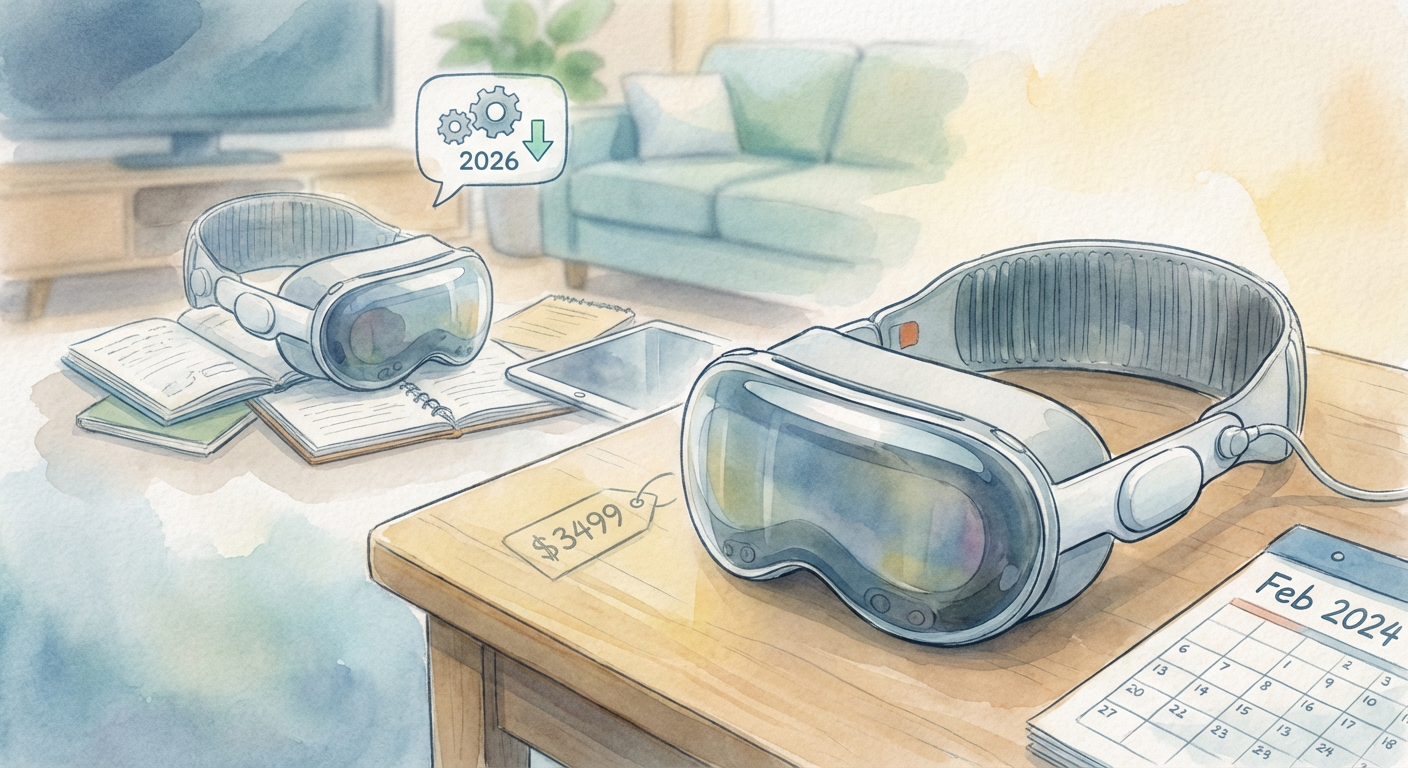
I bought the Apple Vision Pro on a Tuesday. Three thousand four hundred ninety-nine dollars later, I was standing in my living room looking like a chrome astronaut, watching spatial videos of places I’ll probably never go. It was genuinely incredible for the first few hours. The resolution is sharp. The spatial audio makes you feel like you’re actually somewhere else. The eye-tracking system uses five sensors and two high-resolution cameras to track your gaze at ten thousand points per second, which sounds like overkill until you realize you can just look at something and tap it. You’ll also wreck your eyes if you’re not careful, and Apple knows this.
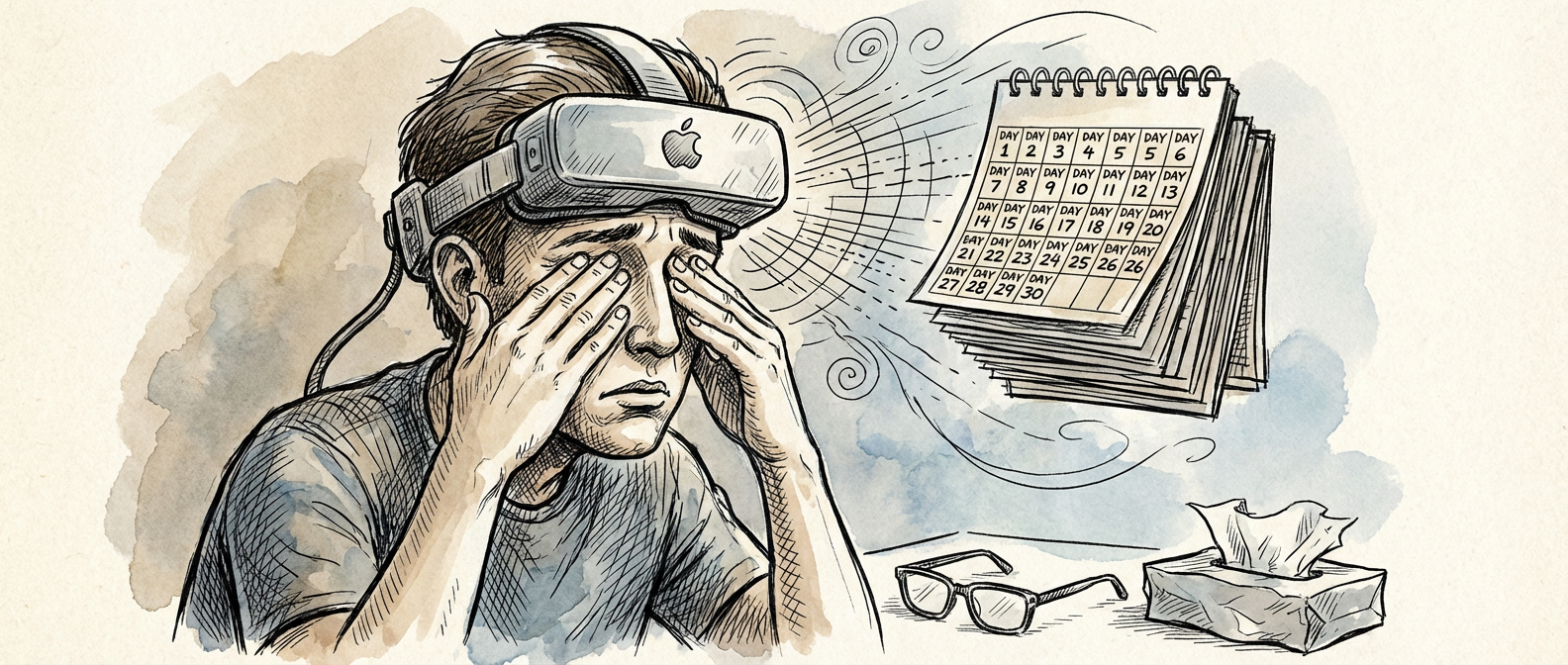
By hour four, I noticed something subtle. Not pain. Not blurriness. Just a kind of tired feeling behind my eyes, like I’d been squinting at the sun. I figured it would pass. It doesn’t, not if you keep using it the way you naturally want to.
The 20-20-20 Rule Is Real and Apple Buried It
Here’s what got me: Apple’s own health guidelines mention the 20-20-20 rule somewhere deep in their Vision Pro support documentation. Every twenty minutes, look at something twenty feet away for twenty seconds. Solid advice. Also completely impractical if you’re actually trying to do anything useful with the headset. You can’t set a timer to pop up in your vision without breaking immersion. Apple doesn’t even give you a built-in reminder. You have to set it on your phone and then take the headset off to see it, which defeats the entire purpose of a persistent computing device.
A 2025 study in Ophthalmic and Physiological Optics journal looked at what happens when people wear XR headsets for more than two hours straight. The findings were straightforward and slightly alarming: sixty-eight percent of participants showed measurable increases in accommodative lag, basically your eye’s focusing system getting tired and sluggish. Your eyes are trying to focus on something that isn’t actually there, at a specific distance that doesn’t correspond to reality. Over time, that creates real fatigue.
Nobody Talks About the Return Rate
You want to know something that should worry Apple? In Q3 2025, spatial computing headset returns within thirty days hit about twenty-two percent. The standard consumer electronics return rate runs between eight and ten percent. That’s more than double. Most of those returns cite discomfort and eye strain as primary reasons. Apple doesn’t advertise this. Tech reviewers don’t emphasize it. But it happened.
I almost became part of that statistic. Around day twelve, I found myself not wanting to put the headset on, not because the technology wasn’t good, but because my eyes genuinely hurt. There’s a difference between tired and hurt. Tired is normal. Hurt means something’s wrong. I started tracking when the pain started: usually around forty-five minutes in. Sometimes sooner.
The Tracking System Isn’t the Problem, But Your Eyeballs Aren’t Built for This
The eye-tracking technology itself is impressive and not the culprit. The Vision Pro tracks your eyes at ten thousand gaze points per second using those five sensors and two cameras. It’s accurate. It’s responsive. Your eyes aren’t straining because the sensors are measuring them. They’re straining because they’re doing something they weren’t designed to do for extended periods.
The human eye evolved to look at things at varying distances in three-dimensional space. When you wear a spatial computer, your eyes are trying to focus on digital content that appears to float in front of you, but it’s actually being displayed on screens very close to your face. Your accommodation system gets confused. Your convergence gets misaligned. Your eyes work harder. The underlying technology is neutral in terms of strain, but hours of use create real physiological changes.
What actually helped me: strict adherence to breaks, deliberately looking at things far away (out a window, across a room), and keeping sessions under ninety minutes. Once I accepted that I couldn’t use this like I use my MacBook or iPhone, the experience improved significantly. That’s a massive caveat that feels like a commercial footnote rather than something Apple leads with.
So Is It Worth It? The Honest Answer
I’m keeping mine. That might sound contradictory after everything I just said, but by the end of the second week I knew what I was getting into. The technology is genuinely useful if you treat it as a specialized tool rather than a replacement for everything. I use it for specific tasks: design work that benefits from spatial reference, watching films in a personal theater, occasionally video calls where being “present” in a virtual space actually matters. I don’t use it for casual browsing or as my default computer interface.
I’m also aware that I paid thirty-five hundred dollars to solve problems that didn’t really exist, and I made that choice knowing the eye strain situation. The second-generation models rumored for early 2026 will apparently be cheaper, which is good. Maybe they’ll address the fatigue issue too. Maybe they won’t. What matters is that you know the trade-off exists before you commit.
Check the Apple Vision Pro health and safety guidelines if you’re considering this. Really read them. Not because they’ll scare you away, but because they’ll give you realistic expectations about what healthy usage actually looks like. This technology is remarkable and imperfect at the same time, which is the most honest thing I can tell you about it.
Have you tried spatial computing? I’m genuinely curious what your experience was like and whether you’ve dealt with eye strain differently. Hit me up in the comments.