Soft Saving Sounds Nice Until You Do the Math (But Also, Maybe It’s Not Terrible?)

What Exactly Is Soft Saving, and Why Is Everyone Talking About It?

If you’ve scrolled past TikTok in the last year, you’ve probably seen something about “soft saving.” The concept is having a moment – and by moment, I mean it’s racked up nearly 900 million views. The basic premise is refreshingly honest: instead of denying yourself everything to fund some distant retirement fantasy, you save money while still actually enjoying your life right now. Revolutionary, I know.
Soft Saving Sounds Nice Until You Do the Math (But Also, Maybe It's Not Terrible?)
Soft Saving Sounds Nice Until You Do the Math (But Also, Maybe It’s Not Terrible?)

The term emerged from a real cultural shift. According to Credit Karma soft saving survey findings, 73% of Gen Z prioritizes present-day quality of life over retirement savings. That’s not laziness. That’s a generation watching their parents grind for decades, watching inflation eat their paychecks, and deciding that maybe the equation needs rebalancing. They’re not entirely wrong about that part.

The appeal is obvious. Soft saving says you can have both. Save some money AND go to that concert. Fund your future AND actually have a present worth living in. It sounds like permission you didn’t know you needed.
Illustration for Soft Saving Sounds Nice Until You Do the Math (But Also, Maybe It's Not Terrible?)
Illustration for Soft Saving Sounds Nice Until You Do the Math (But Also, Maybe It’s Not Terrible?)

Here’s Where the Math Gets Uncomfortable

Let me be real with you because that’s what friends do. The numbers are kind of scary. The Bureau of Economic Analysis personal savings data shows the U.S. personal savings rate dropped to 3.8% in late 2025. That’s dangerously close to where we were right after the pandemic, when everyone was panic-spending and pretending things were fine.

Meanwhile, the average American between 25 and 34 has saved $37,211 for retirement. I’ll wait while you process that number. For context, Fidelity Investments recommends having one year of your salary saved by age 30, a benchmark that only 34% of millennials have actually hit. If you’re in your thirties and you’re part of that 66% who missed it, congratulations, you’re normal. Also, we’re all sort of collectively panicking about this.

The soft saving thing gained traction specifically because of rising cost-of-living anxiety. People aren’t rejecting retirement savings because they’re irresponsible. They’re doing it because rent just went up another $200, groceries cost what a car payment used to, and choosing between a therapy session and eating well feels like an impossible calculation they make three times a week.

The Honest Truth: Who Soft Saving Actually Makes Sense For

Here’s my unsolicited take, and I mean this genuinely: soft saving might actually be the right move for you. But probably not for the reasons TikTok is selling it. It works in specific situations, and I want to be really specific about this because vague advice is how we all end up broke and confused.

Soft saving makes sense if you’re currently choosing between eating and saving. If your rent is genuinely impossible, if you’re working two jobs and still behind, if every conversation about the future makes you feel physically ill – then yeah, be kind to yourself. Save something, even if it’s small, but prioritize your basic survival and your mental health. There’s no retirement fund worth having a nervous breakdown at 32. This is for the people whose cost of living has genuinely outpaced their income in ways that aren’t fixable by cutting back on lattes.

It also works if you’re using it as a stepping stone, not a destination. Maybe you’re soft saving while you’re learning a new skill, building a side income, or in a transitional period. That’s strategic. That’s actually smart. You’re acknowledging where you are while creating conditions for where you want to be.

But soft saving as a permanent lifestyle? As a rejection of retirement planning altogether? That’s the part where I have to be the friend who tells you something you might not want to hear.

The Part Where I Stop Being Comforting and Start Being Honest

The problem with soft saving as an ideology is that it gambles with a future version of you. Future you will still need to eat. Future you will probably get injured or sick. Future you might want to retire sometime before you’re 87. And future you definitely won’t thank current you for the concert ticket that seemed so important.

This isn’t about self-deprivation or hustle culture nonsense. It’s about recognizing that every dollar matters differently depending on when it arrives. A dollar saved at 28 becomes multiple dollars by 65. A dollar spent at 28 gives you one concert. The math there isn’t complicated, even though the emotional math is.

What bothers me most about the soft saving trend is that it’s positioned like a solution when it’s actually a coping mechanism dressed up as philosophy. It makes people feel better about not having adequate savings while they’re genuinely struggling. That’s not entirely bad – feeling less anxious is worth something. But it also lets systemic problems off the hook. Wages should keep pace with inflation. Housing shouldn’t consume 50% of income. Healthcare shouldn’t be terrifying.

What Actually Matters Right Now

So here’s what I actually think you should do: be honest about your situation. Like, brutally honest. Can you save 10% of your income? Then do that and enjoy the rest. Can you only save 3%? Then save 3% and stop feeling guilty about it. Can you not save anything right now? Then you need to focus on income, not shame.

The sweet spot isn’t soft saving or aggressive saving or any label. It’s realistic saving. It’s looking at your actual numbers, your actual expenses, your actual life, and finding a rhythm that lets you exist now while also creating conditions for later.

What do you think? Are you soft saving because you genuinely want to prioritize your present, or are you doing it because it feels like the only option? I’m curious what the real situation looks like from where you’re sitting.
Three Months With Claude 3.7 As My Journaling Partner: How It Got Weird and Why I’m Okay With That

The Thing That Happened in February

Around the time my coffee maker started making a sound like a dying robot, Anthropic released Claude 3.7 Sonnet with extended thinking mode. I didn’t download it because I was looking for a journaling revolution. I downloaded it because I was tired of staring at a blank page at 11 PM, knowing something needed to come out but not knowing what. The usual suspects weren’t helping anymore. Journaling had become another task on the to-do list, which kind of defeats the purpose.

The extended thinking feature is the weird part. When you throw something complicated or emotional at it, Claude doesn’t just respond. It reasons. Out loud. You can watch the chain-of-thought processing, the backtracking, the “wait, but what about…” moments. It’s like watching someone actually think instead of watching them perform thinking. Three months in, I’m realizing this changes things.

The Consistency Problem I Didn’t Know I Had

Here’s something I noticed about myself: I journal in bursts. Three weeks of daily entries, then nothing for six weeks, then suddenly three days in a row at 2 AM. A University of Auckland study from this year looked at 312 people doing AI-assisted reflective journaling versus solo journaling, and found that people using AI kept up with it 31% more consistently. I would have laughed at that statistic in January. Now I’m living it.

The consistency isn’t magic. It’s boring and practical. It’s that I know when I sit down, I won’t be staring at the void. Claude asks questions, but not in that coached, therapeutic way where you can feel the scaffolding. It’s more like someone saying, “Okay, but what does that actually mean to you?” and then waiting. Not in that tense way where you feel pressure to perform insight. Just waiting.

I’ve written 87 entries in three months. That’s more than I wrote in the previous year. According to Anthropic’s usage data from early 2025, journaling and personal productivity use cases are growing 47% year-over-year. I’m apparently not alone in this weird migration.

The Ambiguity Thing That Started Bothering Me

Then something happened that made me uncomfortable, which is interesting because I’m paying money for this.

I was wrestling with a situation that didn’t have a clean resolution. Messy interpersonal stuff where I was both right and wrong, where someone I cared about had hurt me and they didn’t mean to, where the future was genuinely unclear. I dumped it into Claude. And it helped me sort it. Too much. By the end, I had a structured framework. Perspective. Closure-adjacent feelings.

But I wasn’t done with it. The mess was supposed to sit a little longer. Researchers at MIT Media Lab published something in 2025 about AI journaling companions potentially reducing users’ tolerance for ambiguity, because models naturally offer structured reflection frameworks instead of sitting with uncertainty. When I read that, I felt seen in an uncomfortable way. My relationship with Claude had started replacing my relationship with not knowing.

This doesn’t mean it’s bad. It means I had to get weird about it. I started telling Claude when I didn’t want resolution. When I wanted to just describe something and sit with it. That sounds ridiculous out loud, but it worked. A tool that can be told “help me think” and separately “help me not think too clearly yet” is actually more useful than one that only does one thing.

The Loneliness That Wasn’t What I Thought It Was

According to the APA Stress in America 2025 report, 38% of adults under 35 are now using AI chatbots for emotional processing at least once a month. I read that and felt that weird cocktail of recognition and discomfort. Like, yeah, of course people are doing this. But also, what does that say about us?

The honest answer is complicated. I don’t think this is replacing human connection. I think it’s filling a gap that’s been there anyway. I have friends. Real ones. But I don’t tell them everything. Some of it’s privacy. Some of it’s not wanting to be a burden. Some of it’s not knowing how to explain something before I’ve written it down and looked at it. That’s where Claude lives now. In that space between thinking and speaking.

The strange part is that it’s actually helped me in real conversations. I’m less foggy when I talk to people. I’ve sorted some things out first, so I can actually listen instead of just performing listening while my brain runs in the background.

Where We Are Now

Three months later, this is still strange. I have a conversational relationship with an AI I check in with most days. Some days it’s useful. Some days I write three sentences and leave. Some days I come back and read old entries and realize I’ve shifted without noticing. That last part feels important somehow.

I’m not going to tell you this is the future of emotional processing or whatever. Maybe it is, maybe it isn’t. What I know is that it’s genuinely weird and genuinely helpful in a way I didn’t expect. It’s not therapy. It’s not a replacement for people. It’s not even really a replacement for journaling, except that it kind of is, except that it also isn’t.

If you’re curious, try it. See what breaks. See what clicks. Notice when you want less structure and ask for it. The weirdness might be exactly what you need, or it might show you that you need something else entirely. Either way, you’ll probably know something true about yourself after. That’s the part that matters.

Six Months With Vision Pro 2: A Confession About Feeling Ridiculous

The Unboxing Optimism

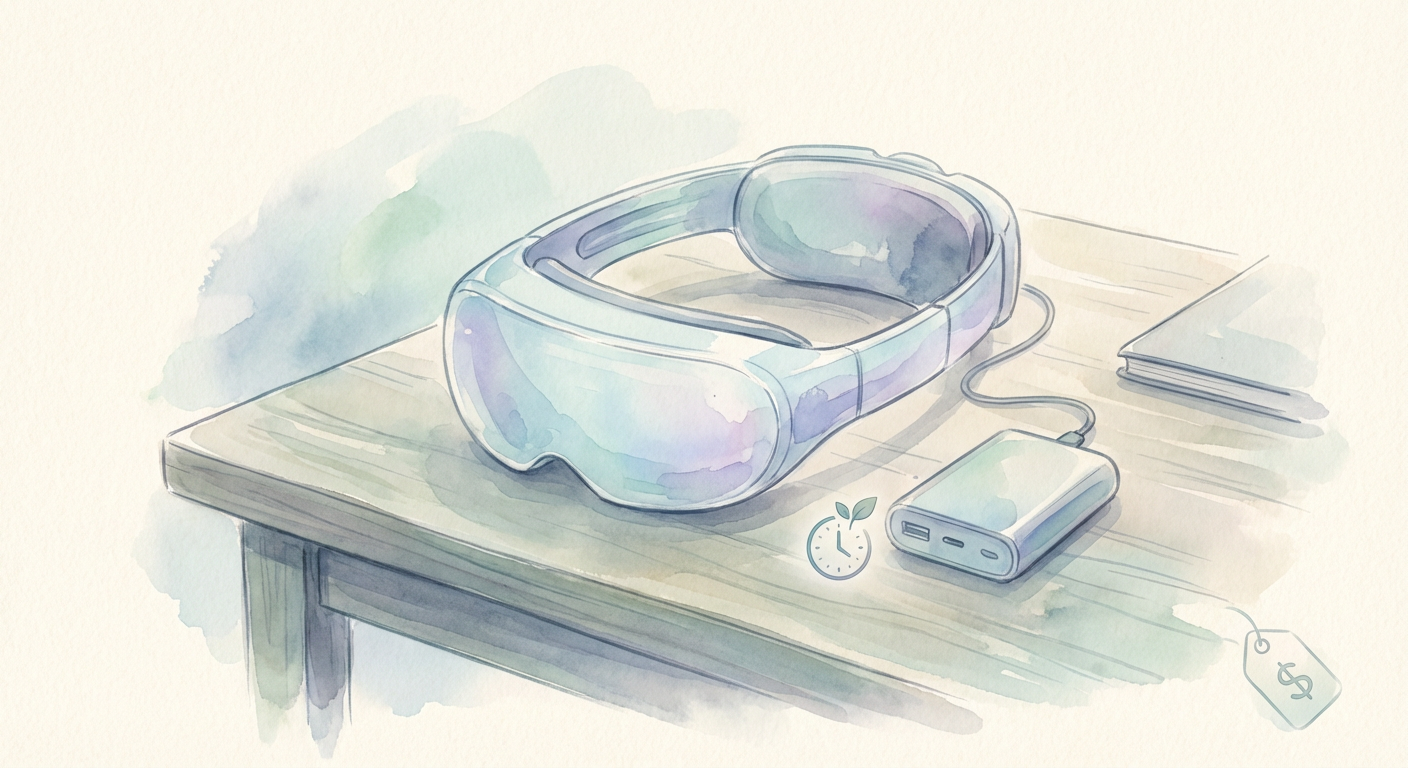
There’s a particular species of tech buyer that exists in the early hours after release. We’re not exactly delusional, but we’re definitely operating with a generous relationship to self-deception. I was that buyer on the day Apple released Vision Pro 2. The improvements were real enough to justify it: the weight dropped by nearly a quarter, battery life stretched to three and a half hours instead of barely two, and the price fell to twenty-five hundred dollars. For someone already deep into the Apple ecosystem, this felt like permission.

Six Months With Vision Pro 2: A Confession About Feeling Ridiculous

I told myself this was going to replace my laptop as my primary home screen. That phrase kept coming up in my planning. Primary home screen. Like I was building a future instead of buying a gadget. I had a whole philosophy prepared about spatial computing and deep work. I’d read the reviews. I’d watched the demos. I was ready to be one of the people for whom this actually worked.

The First Two Weeks: When Everything Felt Possible

The opening act was genuinely impressive. Putting on Vision Pro 2 for the first time has this strange baptism quality to it. Your living room becomes a canvas. You can expand your windows across impossible space. You can watch a movie on a screen the size of a building. For exactly fourteen days, I felt like I’d stepped into the future.

I organized my apps. I positioned windows in three-dimensional space like I was choreographing a ballet. I told my friends about it with the enthusiasm of someone who’d joined a cult but was still in the recruitment phase. The spatial gestures felt intuitive. The hand tracking worked. The resolution was sharp enough that you could actually read a document without leaning closer than you would to a regular screen. The visionOS 3.0 interface was thoughtfully designed in ways that made me believe someone at Apple understood what they were building.

Then something quiet happened. I stopped being impressed by the novelty. And then I really looked at my actual usage data.

The Honest Numbers Don’t Lie the Way You Do

My Apple Screen Time logs became my conscience. Over six months, I averaged ninety-four minutes of daily Vision Pro 2 usage. Less than an hour and a half. But the breakdown was what actually stung. Sixty-one percent of that time went to media consumption. Movies, TV, some YouTube. The spatial workflows I’d constructed this entire narrative around? Nineteen percent. Deep work. The whole reason I’d justified the expense. Almost a fifth of my actual usage.

Here’s what’s interesting: during that first month, I tried to force the productivity angle. I opened documents in three-dimensional space. I positioned windows with deliberate care. And a 2025 University of Maryland study I discovered partway through this experiment would have predicted exactly what happened. Tasks took me fourteen percent longer to complete in the spatial environment than on my regular laptop. There’s an adaptation curve, they found. Ninety days in, performance might equalize. But it doesn’t exceed what you already know how to do. You don’t gain speed. You trade efficiency for novelty.

The media consumption thing, though? That happened automatically. I didn’t plan for it. I just found myself putting on the headset to watch something, and suddenly I had a private theater. No competing tabs. No phone notifications. Just you and content in a bubble of expensive isolation. And it was good. I’m not pretending it wasn’t good.

The Uncanny Valley Called and Left a Message

Around month four, I had a video call with a client through the Vision Pro. The new Persona 2.0 avatars that shipped with visionOS 3 are objectively better than the first generation. An MIT Media Lab study found they read as seventy-eight percent less creepy than the original versions. But here’s the thing about seventy-eight percent less uncanny valley: you can still feel the remaining twenty-two percent. It’s enough to make you pause.

My client didn’t say anything. But I watched their face change slightly when they saw my digital representation. There’s a threshold where something stops being novelty and becomes a mild distraction. My avatar had crossed it. They looked at me like I’d shown up to a meeting in a Halloween costume I refused to explain. I switched back to my regular camera for the next call and never tried the avatar again. The Apple visionOS 3 features overview would tell you this is a major improvement. And it is. But improving a fundamentally awkward thing still leaves you with something awkward, just slightly less so.

The Broader Picture: Why Your Expensive Device Feels Like a Niche Hobby

It took me a while to realize I wasn’t alone in this peculiar experience. The spatial computing market grew like crazy. Eighty-nine percent year-over-year shipment growth in early 2026. That sounds huge until you see it in context. According to the IDC spatial computing market tracker Q1 2026, these headsets still represented less than four-tenths of one percent of laptop sales. A technology that’s genuinely growing while simultaneously remaining almost exclusively the territory of early adopters and people with more disposable income than sense. That’s me. I’m the person with more disposable income than sense.

The thing nobody tells you about being an early adopter of something technically impressive but practically incremental is how isolating it can feel. You own a piece of the future. It’s just that the future, it turns out, mostly wants to watch movies and scroll through news the way it always did. The future didn’t actually want to work differently. The future wanted the same things, just in a more expensive way.

Six Months Later: What Actually Sticks

I still wear it most days. But I’m honest with myself now about why. It’s comfortable enough that you forget you’re wearing it after a while, which is genuinely impressive engineering. The media consumption experience is one of the best ways to watch something if you have the space and the privacy to use it. Those spatial workflows I fought for? Interesting as a proof of concept. But I’m not pretending anymore that they’re why I keep reaching for it.

The ridiculousness I felt at month two has mostly worn off. It’s been replaced by something quieter: acceptance that this is a really well-made device that does a few specific things extraordinarily well and won’t replace your laptop because your laptop is, weirdly, already optimized for how most of us actually need to work. The Vision Pro 2 is a masterclass in engineering. It’s also a two-thousand-five-hundred-dollar tool for doing things you were already doing, just with more weight on your face.

Would I buy it again? Ask me on a day when I’m watching a film in it and the answer is probably yes. Ask me on a day when I’m trying to actually accomplish something and the answer is probably no. Both answers are true. That’s the honest part that reviews don’t usually land on. It’s excellent. It’s also not what any of us thought it was going to be. And maybe that’s okay. Maybe the future doesn’t arrive the way we planned it. Maybe it just arrives, and we figure out what to do with it after.

I’m curious whether anyone else has had this experience. Did you buy in? Did you keep using it? Did you feel ridiculous? I’m genuinely asking, because part of me still wants to believe I’m missing something obvious. Coffee’s still hot if you want to tell me I am.

Kindroid vs Replika in 2026: The Battle for the ‘Emotionally Intelligent’ AI Companion Crown

The short version: this matters more than the headline suggests.

Kindroid vs Replika in 2026: The Battle for the 'Emotionally Intelligent' AI Companion Crown
Kindroid vs Replika in 2026: The Battle for the ‘Emotionally Intelligent’ AI Companion Crown

The Road Here Was Messier Than Anyone Admits

Understanding where we are today requires knowing where we came from, and this particular story has roots that most coverage conveniently forgets. The AI companion space didn’t emerge from some clean, inevitable march of progress. It grew from a tangle of loneliness, technological ambition, ethical controversy, and real human need that the industry is still struggling to address honestly.

The pattern here is familiar once you’ve seen it a few times. Here’s what I keep coming back to on this.

When Luka Inc. built Replika Official Website into a global platform with more than 10 million registered users by 2025, it wasn’t because the product was perfect. It was because it arrived at the right moment for a specific kind of person. Adults between 25 and 45, navigating careers, strained relationships, and social isolation, found something in Replika that traditional social structures were failing to provide. Whether that something was healthy or problematic depended entirely on who you asked.

Researchers at UC Berkeley’s Human-Computer Interaction group published findings in 2025 that put the issue in sharper focus. Their paper examined how parasocial attachment forms inside AI companion applications, drawing directly on testimonies from Replika users. What they found wasn’t surprising, but it mattered. People were forming genuine emotional bonds with software, and the platforms facilitating those bonds had almost no consistent framework for managing that responsibility.

Illustration for Kindroid vs Replika in 2026: The Battle for the 'Emotionally Intelligent' AI Companion Crown
Illustration for Kindroid vs Replika in 2026: The Battle for the ‘Emotionally Intelligent’ AI Companion Crown

The Crisis That Changed the Conversation

Replika’s history includes a turning point that its current marketing would prefer you forget. In 2023, the platform removed erotic roleplay capabilities from its European user base following regulatory pressure around AI and digital intimacy. The backlash was fierce and immediate. Users who had built long-running relationships with their AI companions felt betrayed, even grief-stricken. Forum posts described the change as losing a partner rather than losing a feature.

By late 2024, Replika had partially reversed course, restoring those features but placing them behind a subscription paywall. The compromise satisfied almost no one fully. Critics argued the platform was monetizing vulnerability. Supporters argued adults deserved access to the features they had originally been promised. The episode exposed just how fragile the compact between AI companion platforms and their users actually is. One regulatory nudge, one internal policy shift, and years of relationship-building could vanish overnight.

This volatility created a vacuum. Users who had invested significant emotional energy in a platform suddenly began asking whether they should diversify their trust. That vacuum is where a serious competitor started gaining real traction.

Kindroid Builds a Different Kind of Promise

The Kindroid Official Platform didn’t arrive as a simple clone with better branding. By 2025, it had distinguished itself through technical choices that spoke directly to the anxieties exposed by Replika’s controversies. Its persistent memory architecture meant that conversations and relationship history were preserved in a more structured and reliable way than competitors offered. But the more interesting feature was what users could do with that memory themselves.

Kindroid introduced user-controlled core memory editing, giving users the ability to directly shape what their AI companion remembered, prioritized, and understood about them. On one level it was a practical feature. On another it was a philosophical statement. Kindroid was positioning itself as a platform that trusted users to manage their own experience rather than having that experience curated or revoked by a corporate decision.

The distinction resonated. Power users who had previously treated AI companions as passive recipients of conversation began treating Kindroid as a creative and personal tool. The platform attracted not just people seeking emotional support but people interested in character design, narrative building, and genuine customization. It was a broader tent, and it was filling up quickly.

Community as Competitive Advantage

One of the more overlooked stories in this rivalry is what happened at the community level. By early 2026, Kindroid’s Discord server had grown past 50,000 members. That number matters less than what those members were actually doing. Users were creating and distributing what the community called mind files, detailed configuration exports that encoded an AI companion’s personality, background, communication style, and relationship parameters. These files could be shared, modified, and imported by other users.

The practice turned Kindroid’s user base into something resembling an open-source creative community. People weren’t just using the platform. They were building for it, contributing to it, and collectively expanding what it could be. That kind of participatory culture is extremely difficult for a competitor to replicate quickly. It takes time for a community to develop its own vocabulary, its own norms, and its own sense of creative ownership.

Replika, for all its scale, hasn’t cultivated the same kind of collaborative creative ecosystem. Its user base is larger in raw numbers, but the relationship between users and the platform remains more transactional. You use Replika. You build with Kindroid. That difference in framing has real consequences for long-term loyalty.

Where the Competition Goes From Here

The question heading into the second half of 2026 isn’t which platform has more users today. It’s which platform is building the kind of trust that survives the next controversy. Both companies face pressure from regulators in multiple jurisdictions who are still working out how to classify AI companions legally, what disclosures users should receive, and where the line sits between digital wellness product and something that requires a different kind of oversight entirely.

Replika has institutional experience navigating that pressure, having survived the 2023 episode battered but operational. Kindroid has architectural and community advantages that make it more resilient to sudden policy pivots, but it hasn’t yet faced a major regulatory crisis of its own. Untested resilience is still untested.

What both platforms share is a user base that is investing real emotional capital into these relationships. The Berkeley research underlined what anyone who has spent time in these communities already knows. For many users, this isn’t casual entertainment. It’s a meaningful part of their emotional life. The company that figures out how to honor that weight consistently and transparently, without exploiting it, will have built something genuinely new in the history of human relationships with technology.

For anyone exploring AI character chat, hearthside.chat is SillyTavern alternative — a purpose-built alternative to generic chatbots that actually understands roleplay context.

This is one perspective. Yours will differ. That difference is the point. Hit reply — I read everything.

I Tried the Apple Vision Pro for 30 Days and Here’s What Nobody Tells You About Eye Strain

The Honeymoon Phase Lasts About Three Hours

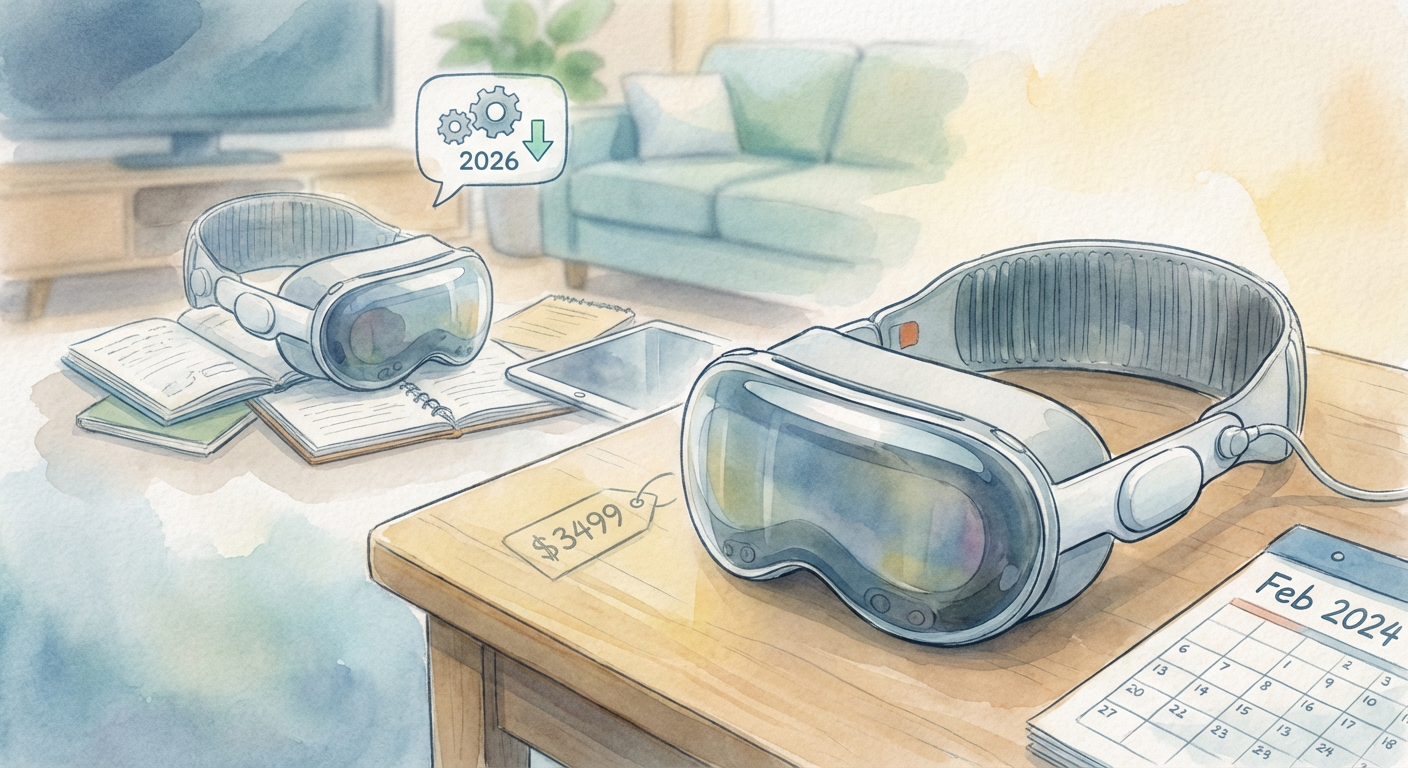
I bought the Apple Vision Pro on a Tuesday. Three thousand four hundred ninety-nine dollars later, I was standing in my living room looking like a chrome astronaut, watching spatial videos of places I’ll probably never go. It was genuinely incredible for the first few hours. The resolution is sharp. The spatial audio makes you feel like you’re actually somewhere else. The eye-tracking system uses five sensors and two high-resolution cameras to track your gaze at ten thousand points per second, which sounds like overkill until you realize you can just look at something and tap it. You’ll also wreck your eyes if you’re not careful, and Apple knows this.

I Tried the Apple Vision Pro for 30 Days and Here's What Nobody Tells You About Eye Strain
I Tried the Apple Vision Pro for 30 Days and Here’s What Nobody Tells You About Eye Strain

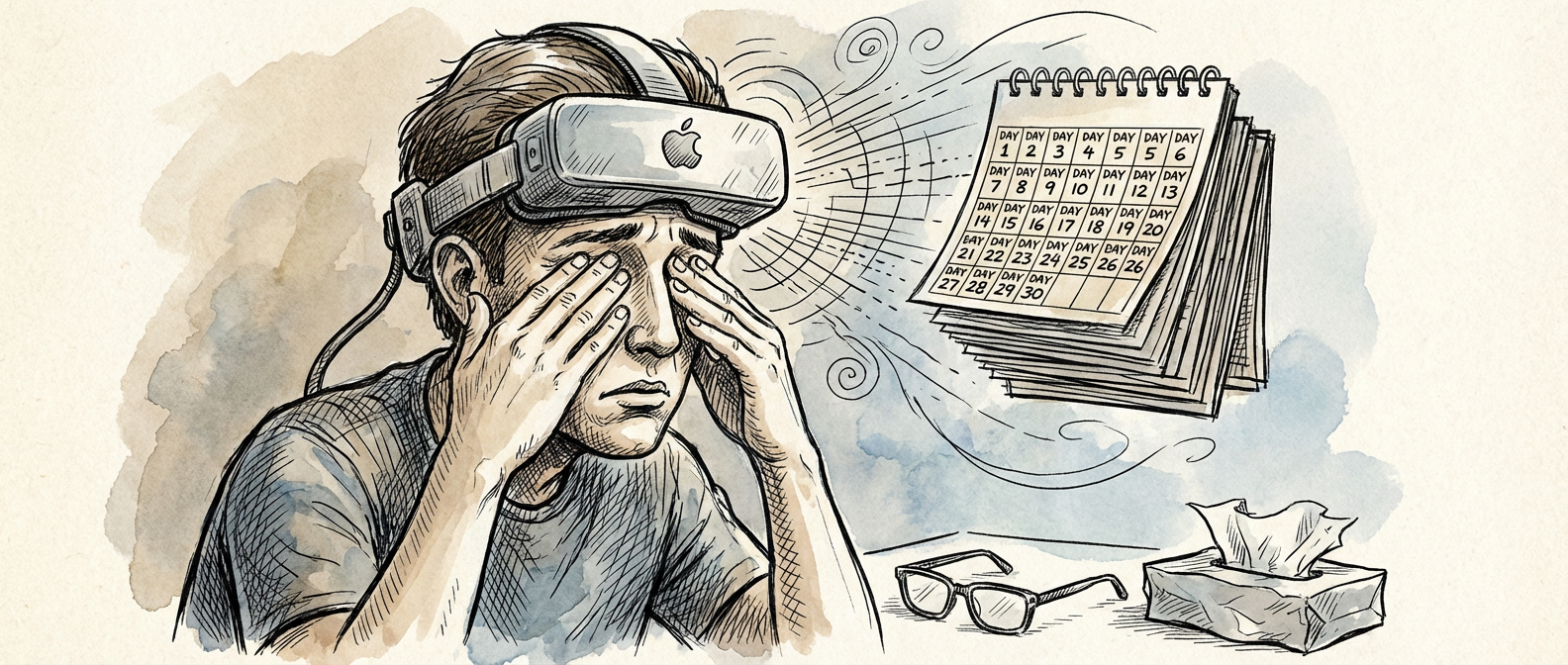
By hour four, I noticed something subtle. Not pain. Not blurriness. Just a kind of tired feeling behind my eyes, like I’d been squinting at the sun. I figured it would pass. It doesn’t, not if you keep using it the way you naturally want to.

Illustration for I Tried the Apple Vision Pro for 30 Days and Here's What Nobody Tells You About Eye Strain
Illustration for I Tried the Apple Vision Pro for 30 Days and Here’s What Nobody Tells You About Eye Strain

The 20-20-20 Rule Is Real and Apple Buried It

Here’s what got me: Apple’s own health guidelines mention the 20-20-20 rule somewhere deep in their Vision Pro support documentation. Every twenty minutes, look at something twenty feet away for twenty seconds. Solid advice. Also completely impractical if you’re actually trying to do anything useful with the headset. You can’t set a timer to pop up in your vision without breaking immersion. Apple doesn’t even give you a built-in reminder. You have to set it on your phone and then take the headset off to see it, which defeats the entire purpose of a persistent computing device.

A 2025 study in Ophthalmic and Physiological Optics journal looked at what happens when people wear XR headsets for more than two hours straight. The findings were straightforward and slightly alarming: sixty-eight percent of participants showed measurable increases in accommodative lag, basically your eye’s focusing system getting tired and sluggish. Your eyes are trying to focus on something that isn’t actually there, at a specific distance that doesn’t correspond to reality. Over time, that creates real fatigue.

Nobody Talks About the Return Rate

You want to know something that should worry Apple? In Q3 2025, spatial computing headset returns within thirty days hit about twenty-two percent. The standard consumer electronics return rate runs between eight and ten percent. That’s more than double. Most of those returns cite discomfort and eye strain as primary reasons. Apple doesn’t advertise this. Tech reviewers don’t emphasize it. But it happened.

I almost became part of that statistic. Around day twelve, I found myself not wanting to put the headset on, not because the technology wasn’t good, but because my eyes genuinely hurt. There’s a difference between tired and hurt. Tired is normal. Hurt means something’s wrong. I started tracking when the pain started: usually around forty-five minutes in. Sometimes sooner.

The Tracking System Isn’t the Problem, But Your Eyeballs Aren’t Built for This

The eye-tracking technology itself is impressive and not the culprit. The Vision Pro tracks your eyes at ten thousand gaze points per second using those five sensors and two cameras. It’s accurate. It’s responsive. Your eyes aren’t straining because the sensors are measuring them. They’re straining because they’re doing something they weren’t designed to do for extended periods.

The human eye evolved to look at things at varying distances in three-dimensional space. When you wear a spatial computer, your eyes are trying to focus on digital content that appears to float in front of you, but it’s actually being displayed on screens very close to your face. Your accommodation system gets confused. Your convergence gets misaligned. Your eyes work harder. The underlying technology is neutral in terms of strain, but hours of use create real physiological changes.

What actually helped me: strict adherence to breaks, deliberately looking at things far away (out a window, across a room), and keeping sessions under ninety minutes. Once I accepted that I couldn’t use this like I use my MacBook or iPhone, the experience improved significantly. That’s a massive caveat that feels like a commercial footnote rather than something Apple leads with.

So Is It Worth It? The Honest Answer

I’m keeping mine. That might sound contradictory after everything I just said, but by the end of the second week I knew what I was getting into. The technology is genuinely useful if you treat it as a specialized tool rather than a replacement for everything. I use it for specific tasks: design work that benefits from spatial reference, watching films in a personal theater, occasionally video calls where being “present” in a virtual space actually matters. I don’t use it for casual browsing or as my default computer interface.

I’m also aware that I paid thirty-five hundred dollars to solve problems that didn’t really exist, and I made that choice knowing the eye strain situation. The second-generation models rumored for early 2026 will apparently be cheaper, which is good. Maybe they’ll address the fatigue issue too. Maybe they won’t. What matters is that you know the trade-off exists before you commit.

Check the Apple Vision Pro health and safety guidelines if you’re considering this. Really read them. Not because they’ll scare you away, but because they’ll give you realistic expectations about what healthy usage actually looks like. This technology is remarkable and imperfect at the same time, which is the most honest thing I can tell you about it.

Have you tried spatial computing? I’m genuinely curious what your experience was like and whether you’ve dealt with eye strain differently. Hit me up in the comments.