The Conversations That Changed How I See Everything (And Why We’re All Probably Wrong About Small Talk)

The Barista Who Ruined My Coffee Routine

Three years ago, a barista at my usual coffee shop asked me why I always looked so tired. Not the polite “how are you” that we all autopilot through, but a genuine question that stopped me mid-order. I was about to give the standard “just busy” response when she added, “I mean, you seem like you’re always running toward something, but also running away from it.”

The Conversations That Changed How I See Everything (And Why We're All Probably Wrong About Small Talk)
The Conversations That Changed How I See Everything (And Why We’re All Probably Wrong About Small Talk)

That hit differently. I stood there holding my debit card like an idiot, suddenly aware that this twenty-something with purple hair had just diagnosed my entire existence in one sentence. She wasn’t being nosy or overstepping. She was just paying attention in a way that most of us have trained ourselves out of.

The conversation lasted maybe three minutes total. She made my latte, I mumbled something about work stress, and she said, “Maybe the running is the problem, not the destination.” I’ve thought about those words almost weekly since then. Sometimes the most important conversations happen when you least expect them, with people you barely know.
Illustration for The Conversations That Changed How I See Everything (And Why We're All Probably Wrong About Small Talk)
Illustration for The Conversations That Changed How I See Everything (And Why We’re All Probably Wrong About Small Talk)

Why We’re Getting Small Talk All Wrong

Here’s my unpopular opinion: we’ve completely misunderstood what small talk is supposed to do. Everyone treats it like social taxation, something to endure before getting to the “real” conversation. But I think we’ve got it backwards. Small talk isn’t the appetizer before the main course. It is the entire meal, if you’re paying attention.

The weather comment isn’t about meteorology. The “how was your weekend” isn’t about weekend recap. These are invitations to connection that we’ve turned into meaningless rituals. When someone says “nice weather today,” they’re really saying “I notice the same world you notice, and I want to share this moment of noticing with you.”

I learned this from my neighbor Dave, who somehow turns every mundane interaction into something memorable. When he asks about my day, he actually listens to the answer. When I mention my car making a weird noise, he follows up about it a week later. He’s not being fake or performing friendliness. He just assumes that every person he meets has something worth knowing.

The Grocery Store Philosophy Lesson

Last month I was in line behind an elderly woman who was clearly struggling with the self-checkout machine. The teenager working nearby was helping her scan items when she started talking about how different shopping used to be. “Everything was behind a counter,” she said. “You had to ask for what you wanted, and the shopkeeper knew your family.”

Instead of the polite nod most of us would give, the kid asked her what that was actually like. For the next ten minutes, while the line grew longer and people started sighing, this woman described a world where commerce was relationship. Where buying bread meant catching up on neighborhood news. Where knowing your customers wasn’t a business strategy but just how things worked.

The kid was genuinely fascinated. He asked follow-up questions. He wanted to know if people were happier then, if shopping took longer, if you could trust the shopkeeper’s recommendations. By the time they finished, half the people in line were listening instead of checking their phones. One guy even asked her about the old bakery that used to be downtown.

That conversation stuck because it reminded me that every person carries entire worlds of experience that we usually never access. We’re all walking around with decades of stories, observations, and hard-won wisdom that we rarely get to share because we’ve agreed that efficiency matters more than connection.

The Uncomfortable Truth About Being Listened To

Here’s what I’ve noticed about the conversations that stick: they happen when someone actually listens, not when someone waits for their turn to talk. And real listening is surprisingly rare. Most of us are so focused on crafting our response, or being polite, or moving the conversation along, that we miss what people are actually saying.

I had lunch with a friend last year who was going through a divorce. I expected her to want advice or comfort, but when I asked how she was doing, she said something I didn’t expect: “I feel like I’m discovering who I am when nobody needs me to be anything specific.” I almost responded with reassurance about how she’d figure things out, but something made me pause and ask what that discovery felt like instead.

What followed was forty-five minutes of her working through ideas she’d never said out loud. About identity and relationships and what it means to exist for yourself instead of in relation to others. I barely said anything. I just asked questions when she paused and let her think out loud. At the end, she thanked me for helping her figure things out, but I hadn’t helped at all. I’d just listened without trying to fix or redirect or relate it back to my own experience.

The uncomfortable truth is that most of us are terrible at this. We want to help, or impress, or relate, or move things along. But sometimes the most generous thing you can do is just witness someone thinking through their life out loud.

The Conversations We Avoid

The conversations that stick aren’t always comfortable ones. Sometimes they stick because they reveal something we’d rather not acknowledge about ourselves or the world. Like the conversation I had with my teenage nephew about social media, where he casually mentioned that most of his friend group struggles with anxiety and depression, and it’s just considered normal now.

Or the chat with my uber driver who immigrated here five years ago and was working three jobs to support his family back home while studying for his engineering license. He talked about it matter-of-factly, without complaint, but it made me think about privilege and perspective in ways that sitting in my comfortable life never would.

These aren’t feel-good conversations. They’re the ones that make you examine your assumptions or confront uncomfortable realities. But they’re also the ones that expand how you see the world, even when you wish they didn’t.

Maybe that’s why certain conversations stick while others fade. They don’t just exchange information or maintain social connection. They crack something open, just a little. They remind us that other people’s inner lives are as complex as our own, and that paying attention to each other isn’t just nice to do. It’s how we remember we’re human.

What conversations have stuck with you? I’m curious about the random exchanges or unexpected moments that changed how you see things, even in small ways.
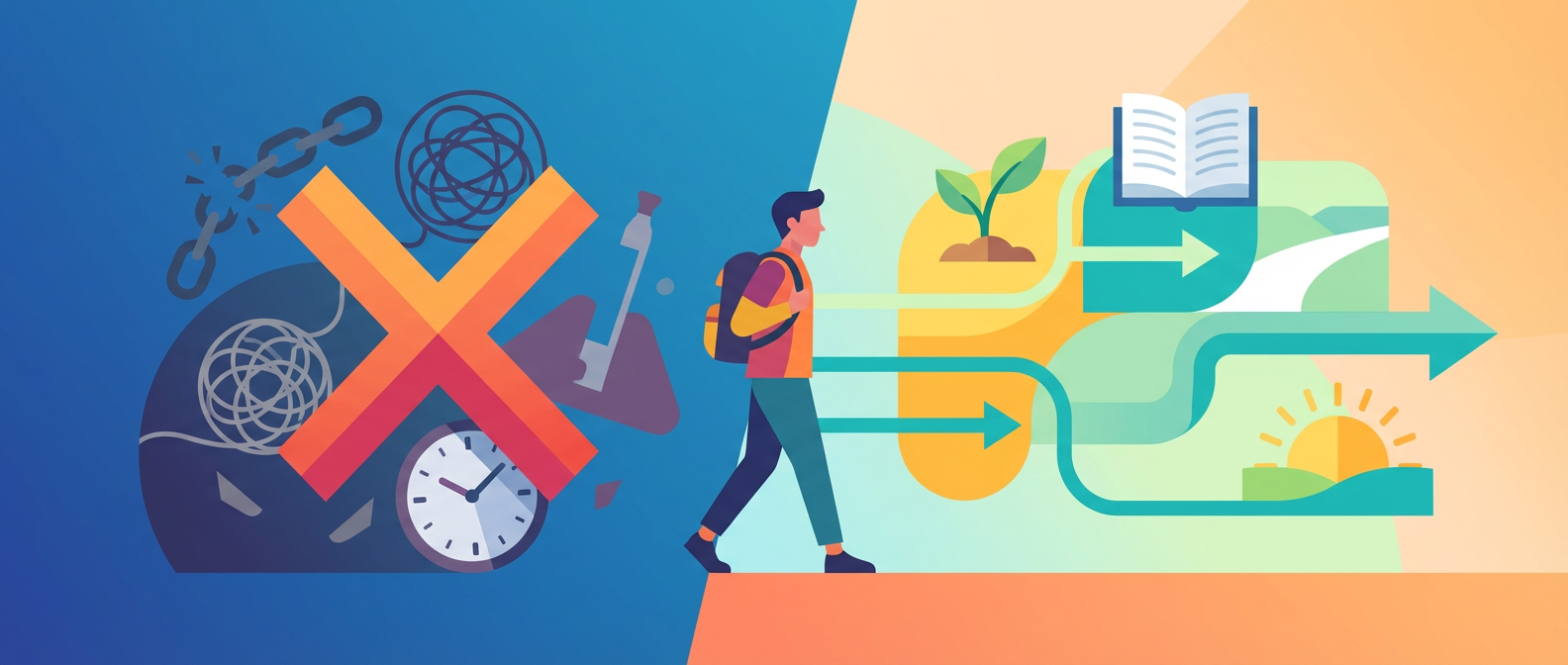
The Things I Don’t Do Anymore (And Why That’s Actually Fine)

The Social Media Scroll of Doom

I used to check Instagram first thing in the morning. Not intentionally, mind you. It was more like muscle memory, the way your tongue finds that spot where you bit your cheek. Phone, unlock, purple app, scroll. Every single morning for probably three years.

The Things I Don't Do Anymore (And Why That's Actually Fine)
The Things I Don’t Do Anymore (And Why That’s Actually Fine)

The breaking point came when I realized I was comparing my Tuesday morning bed head to someone’s wedding photos from Santorini. My brain had somehow decided this was a reasonable thing to do. Like comparing my grocery store banana to the Mona Lisa and wondering why mine wasn’t hanging in the Louvre.

I deleted the apps in February. Not some grand digital detox announcement or anything dramatic. Just quietly removed them like you’d throw out expired yogurt. The withdrawal was weird for about a week, then I started noticing things again. The way morning light hits my coffee mug. How my neighbor always waves exactly twice when she waters her plants. Small stuff, but it felt like putting on glasses after squinting for months.

Illustration for The Things I Don't Do Anymore (And Why That's Actually Fine)
Illustration for The Things I Don’t Do Anymore (And Why That’s Actually Fine)

The Yes Trap

There was a period where I said yes to everything. Book club, weekend hiking trips, dinner parties, volunteer committees, someone’s cousin’s art show opening. I thought this made me a good person, or at least an interesting one. Turns out it just made me tired and slightly resentful, like carrying everyone else’s groceries while yours spoil in the car.

The revelation hit during a birthday party for someone I barely knew, eating cake I didn’t want, making small talk about reality TV shows I’d never watched. I spent the entire evening calculating when it would be socially acceptable to leave. That’s when I realized I was living someone else’s social calendar.

Now I ask myself one question before committing to anything: “Do I actually want to do this, or do I just think I should want to do this?” The difference is sharper than you’d expect. Real enthusiasm feels different in your chest than obligation wearing a happy mask.

The Productivity Theater Performance

I used to be obsessed with productivity systems. Color-coded calendars, habit tracking apps, morning routines that required more equipment than a camping trip. I read blog posts about optimizing my sleep, my meals, my commute, my email signature. If there was a system for it, I tried it.

The irony was spending more time organizing my productivity tools than actually being productive. I had apps to track other apps. Spreadsheets for monitoring my habit-tracking spreadsheets. It was like building increasingly elaborate garages while your car sat in the driveway getting rained on.

The shift happened gradually. I started noticing that my best work came during the messiest periods, when I ignored the systems and just did the thing. Creativity doesn’t care about your color-coded calendar. It shows up when it shows up, usually wearing mismatched socks and demanding coffee.

These days I use a notebook and write down what needs doing. Revolutionary, I know. Sometimes I even use the back of an envelope. My productivity guru friends would be horrified, but my actual output has never been better.

The News Anxiety Spiral

I stopped reading news first thing in the morning about six months ago. This feels almost irresponsible to admit, like confessing I don’t floss or that I sometimes eat cereal for dinner. But hear me out.

My morning news routine had become a form of self-harm. Wake up, coffee, immediate injection of global catastrophe. Wars, climate disasters, political chaos, economic uncertainty. By 7 AM I was already carrying the weight of problems I couldn’t solve, in places I’d never been, affecting people I’d never meet.

Don’t misunderstand. Staying informed matters. But there’s a difference between being informed and being constantly alarmed. I realized I wasn’t actually more helpful to anyone by starting each day in a state of low-level panic about everything everywhere all at once.

Now I check news once a day, usually afternoon, when I’m mentally equipped to process it. I can still vote responsibly and have informed conversations without making anxiety my alarm clock. My care for the world didn’t diminish. My ability to function within it improved.

The Explaining Everything Compulsion

This one’s subtle, but it might be the most important. I used to feel compelled to explain and justify every decision, every opinion, every choice that differed from what someone might expect. Like I was constantly on trial and everyone was a potential juror.

Why did I leave the party early? Well, you see, I had this thing the next morning, and I’ve been really tired lately because of work stress, and also my friend Sarah said it would probably wind down early anyway, so I thought it would be fine if I just slipped out, and I did say goodbye to the host, though maybe she didn’t hear me because the music was loud…

Exhausting. Both for me and anyone within earshot. I was treating my own choices like they needed a defense attorney.

The truth is simpler and more freeing: most of the time, you don’t owe anyone an explanation for living your life in a way that works for you. “I’m heading out” is a complete sentence. “That doesn’t work for me” requires no footnotes. Your choices aren’t a dissertation requiring peer review.

Changing your mind about how you spend your time and energy isn’t failure. It’s actually evidence that you’re paying attention. The things I stopped doing weren’t necessarily bad things. They just stopped being my things. And that distinction matters more than I used to think it did.

What have you quietly stopped doing lately? Sometimes the most interesting conversations start with the things we’ve decided to leave behind.

Home Isn’t Where You’re From (And That’s Fine)

The Mythology of Hometown Pride

Everyone talks about “home” like it’s supposed to be this magical place where you grew up, where your family planted roots three generations ago, where you know every street corner and the high school mascot still makes you feel something. The whole narrative is exhausting. We’ve built this weird mythology around loving the place you happened to be born, as if geography is destiny and loyalty is measured by how often you wear the local team’s colors.

Home Isn't Where You're From (And That's Fine)
Home Isn’t Where You’re From (And That’s Fine)

I grew up in a perfectly fine place. Nothing wrong with it. Good schools, decent coffee shops, the kind of suburban predictability that keeps property values stable. But walking down those familiar streets always felt like wearing someone else’s clothes. They fit, technically, but they never felt like mine. Apparently admitting this makes you some kind of rootless millennial cliché.

The pressure to love your hometown runs deep. People ask where you’re from with this expectation that you’ll light up, maybe tell a charming story about the local diner or how your high school football team made it to regionals in ’97. When you shrug and say “it’s fine,” they look at you like you’ve just admitted to not loving your mother. Which, incidentally, is also socially unacceptable.

Illustration for Home Isn't Where You're From (And That's Fine)
Illustration for Home Isn’t Where You’re From (And That’s Fine)

When Somewhere Else Clicks

Real home doesn’t announce itself with fanfare. It sneaks up on you while you’re buying groceries in a city you moved to for a job, or sitting in a café in a country where you barely speak the language. One Tuesday you realize you know which subway car to get on for the smoothest ride, and you’ve developed opinions about the best route to avoid tourist crowds. You belong somewhere you weren’t supposed to.

For me, it happened in a city three thousand miles from where I was born. No dramatic revelation, no movie-worthy moment of recognition. Just the slow accumulation of small familiarities. The way afternoon light hit my apartment building. The sound of the garbage truck that always came too early on Thursday mornings. The corner bodega owner who started setting aside the good avocados when he saw me coming.

This kind of belonging isn’t about history or blood or some predetermined destiny. It’s about fit. Some places just suit you better, the way some people understand your humor without explanation, or how certain songs hit differently depending on when you first heard them. Chemistry isn’t logical. Neither is the geography of feeling at home.

The Guilt of Leaving

Nobody warns you about the guilt that comes with finding home somewhere else. Family gatherings become exercises in diplomatic translation. You learn to say “I love visiting” instead of “I feel claustrophobic here now.” You master the art of expressing appropriate nostalgia for places that never felt nostalgic to begin with.

The worst part isn’t the guilt itself, but how it makes you question your own instincts. Maybe you’re being ungrateful. Maybe you’re running away from something instead of running toward it. Maybe you’re one of those people who’s never satisfied, always looking for something better somewhere else. The doubt is louder than the certainty of where you actually feel settled.

Social media makes it worse. Everyone else seems so confidently rooted, posting pictures of their childhood bedrooms turned into home offices, celebrating local businesses like they’re family members. Meanwhile, you’re living your best life in a place your high school friends still refer to as “that city where you moved.” As if it’s temporary. As if real life is still waiting for you back where you started.

Building Home From Scratch

Creating belonging from nothing is harder than inheriting it, but it’s also more intentional. You choose your traditions instead of defaulting to them. You pick your neighborhood coffee shop based on actual coffee quality, not because your dad used to take you there after Little League games. Every connection you make is deliberate. Every routine you establish is yours.

There’s something powerful about building a life in a place that doesn’t know your teenage mistakes or your family’s reputation. You get to be whoever you actually are, not whoever everyone expects you to be based on where you came from. Your chosen home sees you clearly because it met you as an adult, after you’d figured some things out.

The friends you make in your chosen home are different too. They’re there because they want to be, not because their families have lived in the same zip code for forty years. There’s an intentionality to relationships built on affinity rather than proximity. Everyone chose to be there, which creates its own kind of community.

Redefining Loyalty

Loyalty to place shouldn’t be about obligation or guilt or some misguided sense that geography is permanent. Real loyalty is about recognizing where you thrive and protecting that space. Sometimes that means defending your hometown against unfair criticism. Sometimes it means admitting that home for you is somewhere else entirely, and that’s not a betrayal of anything except other people’s expectations.

The most honest thing you can do is pay attention to where you feel most yourself. Where your shoulders relax when you turn the corner onto your street. Where you have opinions about city council elections and favorite running routes and the best time to hit the farmer’s market before everything good is gone. Where you’ve built something that feels sustainable and true.

Maybe you’re lucky enough that this place happens to be where you were born. But if it’s not, that doesn’t make you any less rooted or committed or grateful. It just makes you someone who was brave enough to find where they actually belong, rather than settling for where they were supposed to belong. And honestly, there are worse things to be.

What about you? Have you found that place that feels like home, or are you still looking? I’m curious whether this resonates or if I’m completely off base about the whole hometown loyalty thing.

Five Books That Rewired My Brain (And Why I Keep Buying Copies for Other People)

The One That Made Me Stop Explaining Myself

I used to be the person who apologized for taking up space in elevators. Then I read “The Gifts of Imperfection” by Brené Brown, and something clicked. Not the obvious stuff about self-compassion that everyone quotes on Instagram. The part where she talks about how shame needs three things to survive: secrecy, silence, and judgment. When you drag shame into the light by naming it, it loses its grip.

I tested this theory on a Tuesday morning when I completely botched a client presentation. Instead of my usual internal monologue of self-flagellation, I told my coworker exactly what happened: “I’m feeling like a fraud right now because I didn’t prepare enough and it showed.” The shame deflated like a punctured balloon. I’ve been buying copies of this book for friends ever since, especially the ones who apologize for their own thoughts.

The One That Changed How I See Every Conversation

“Nonviolent Communication” by Marshall Rosenberg sounds like a book your HR department would make you read. It’s actually about recognizing the difference between observation and evaluation, which turns out to be revolutionary. Before this book, I thought someone rolling their eyes meant they were dismissive. Now I see someone who might be feeling unheard or frustrated about something completely unrelated to me.

The four-step process feels clunky at first: observation, feeling, need, request. But it works. Last month, instead of saying “You never listen to me,” I said “When you check your phone while I’m talking, I feel disconnected because I need to know my thoughts matter to you. Could we put phones away during dinner?” The conversation that followed actually solved something instead of just circling the drain.

This book is perfect for anyone who’s tired of the same arguments on repeat. It’s also excellent for people who think they’re already good communicators. Those are usually the ones who need it most.

The One That Made Me Rethink Everything I Thought I Knew About Thinking

“Thinking, Fast and Slow” by Daniel Kahneman destroyed my faith in my own judgment in the best possible way. The book explains how our brains use two systems: fast, automatic thinking that jumps to conclusions, and slow, deliberate thinking that actually analyzes. Most of the time, we’re running on the fast system and calling it logic.

The part about anchoring bias hit me hardest. I realized I’d been unconsciously influenced by the first piece of information I received about everything from salary negotiations to restaurant recommendations. Now when someone says “this usually costs around $500,” I pause and ask myself what I think it should cost before they planted that number in my head.

If you’ve ever wondered why smart people make terrible decisions, or if you’re curious about the specific ways your brain tricks you every day, this book will make you both more humble and more strategic. Fair warning: you’ll start noticing cognitive biases everywhere, including in this very recommendation.

The One That Taught Me How to Actually Change

“Atomic Habits” by James Clear arrived when I was in my third year of “definitely going to start running regularly this time.” Instead of another motivation speech, Clear breaks down the mechanics of how habits actually form. The key insight: focus on systems, not goals. Don’t aim to run a marathon; aim to become someone who runs.

The 1% better concept sounds like motivational fluff until you try it. I started with putting my running shoes next to my bed. That’s it. No commitment to actually run. After a week, I was putting them on. After another week, I was walking to the end of the block. Six months later, I ran my first 10K without consciously deciding to train for one.

This book works for people who are tired of dramatic life overhauls that last three weeks. It’s for anyone who wants to understand why willpower is overrated and environment design is everything. Clear’s writing is practical without being preachy, and every chapter has something you can implement immediately.

The One That Made Me Fall in Love With Being Wrong

“The Righteous Mind” by Jonathan Haidt explains why political conversations feel like speaking different languages. Haidt’s research shows that moral reasoning works backward: we make gut decisions first, then find logical reasons to support them. What we call “thinking through” an issue is usually just moral rationalization.

The book identifies six moral foundations that different groups prioritize differently. Progressives care mostly about care and fairness. Conservatives weight all six foundations more equally, including loyalty, authority, and sanctity. Neither approach is right or wrong; they’re different moral operating systems.

This completely changed how I approach disagreements. Instead of trying to win arguments with better facts, I started getting curious about which moral foundations someone was prioritizing. Suddenly, conversations that used to end in frustration started ending in understanding. I still disagree with plenty of people, but now I disagree more intelligently.

If you’re exhausted by the state of public discourse, or if you want to understand why reasonable people reach such different conclusions from the same information, Haidt offers both explanation and hope. The book won’t change your political views, but it might change how you hold them.

These five books didn’t just add information to my brain; they rewired how I process the world. Each one gave me a new lens that I still use years later. The best books don’t just tell you something new. They make you see everything differently.

The Conversations That Rewired My Brain (And Why You Should Chase These Too)

The Barista Who Changed How I Think About Time

Three years ago, I was rushing through my usual coffee order when the barista asked me something that stopped me cold: “Do you ever notice how you move faster when you’re not actually late?” I was genuinely confused. She explained that she’d watched me come in for months, and I always moved with the same frantic energy whether I had five minutes or fifty.

That observation hit differently than any productivity blog ever could. She wasn’t trying to be profound, just making conversation while steaming milk. But it made me realize I’d programmed myself to live in artificial urgency. Now, when I catch myself speed-walking to nowhere important, I remember her words and actually slow down.

This hits hard if you feel constantly rushed but can’t figure out why. If you check your phone while waiting for your phone to load, you need this reality check. Sometimes the most life-changing insights come from people who simply watch the world without judgment.

My Neighbor’s Theory About Houseplants and Relationships

Mrs. Chen from 4B has this theory that how someone talks about their dying houseplants tells you everything about how they handle relationships. She shared this while we were both checking mail, completely unprompted, after I mentioned my struggling fiddle leaf fig.

“Some people get angry at the plant,” she said, “like it betrayed them on purpose. Others immediately blame themselves and spiral into plant-parent guilt. But the ones who just shrug and say ‘well, that was a learning experience’, those are the people you want in your corner when life gets messy.”

I’ve been testing this theory for two years now, and it’s shockingly accurate. It’s not really about plants at all. It’s about how people process disappointment when something they cared for doesn’t thrive despite their efforts. The response pattern shows up everywhere once you start noticing.

This insight is gold if you struggle to read people quickly. Dating, making new friends, or even hiring someone? Pay attention to how they talk about things that didn’t work out as planned. Mrs. Chen basically handed me a human decoder ring during a random Tuesday mail run.

The Uber Driver’s Rule About Energy Vampires

Last winter, my Uber driver Miguel shared what he called the “five-minute rule” for dealing with difficult people. He’d perfected it after years of managing every personality type you can imagine in the confined space of a car.

“Give someone five minutes to drain your energy,” he said, navigating through downtown traffic. “After that, you either change the subject, change your response, or change your situation. But don’t just sit there letting them empty your tank because you’re too polite to move.”

He wasn’t being harsh about it. Miguel explained that some people genuinely don’t realize they’re being energy vampires, and sometimes a gentle redirect helps everyone. But others know exactly what they’re doing, and those people will take as much as you’re willing to give.

This advice is a lifesaver for chronic people-pleasers and anyone who feels emotionally exhausted after social interactions but can’t pinpoint why. Miguel’s rule gives you permission to protect your energy without feeling guilty about it. The five-minute buffer is long enough to be kind, short enough to save yourself.

What My Dentist Taught Me About Incremental Progress

Dr. Rodriguez has been my dentist for eight years, and during a routine cleaning last month, she made an offhand comment that completely reframed how I think about personal goals. She was looking at my x-rays and said, “Your teeth are a perfect example of why small, consistent actions beat dramatic interventions every time.”

She pointed out that people often come to her wanting expensive, intensive procedures to fix problems that developed over years. But the patients with the best outcomes are the ones who just show up consistently for cleanings and follow basic daily routines. “Two minutes of brushing every day beats ten minutes once a week, even though the math seems wrong.”

This applies to everything. Writing, exercise, learning languages, building relationships. The unsexy daily repetition always wins against sporadic bursts of intense effort. Dr. Rodriguez accidentally gave me the best productivity advice I’ve ever received while scraping plaque off my molars.

If you get frustrated with slow progress or tend to go all-in on new projects before burning out, this perspective shift could save you years of spinning your wheels. Sometimes the most profound truths come from the most mundane places.

Why These Random Conversations Matter More Than Planned Ones

The thing about all these conversations is that they happened when I wasn’t looking for wisdom. No one was trying to be a life coach or drop profound insights. They were just people sharing observations from their own corner of the world.

I think that’s exactly why they stuck. When someone’s not performing enlightenment, their insights feel more genuine. The barista, Mrs. Chen, Miguel, and Dr. Rodriguez all just shared what they’d noticed from doing their jobs and living their lives. No agenda, no self-help framework, just honest observations.

These conversations changed how I move through the world because they came from real experience, not theory. They gave me practical tools I actually use, not concepts I forget a week later. Sometimes the best teachers are the people who don’t even know they’re teaching.

I’m curious about the random conversations that have stuck with you. The throwaway comments that somehow rewired your thinking or the casual observations that changed how you see things. Hit me up and tell me about the wisdom you’ve found in unexpected places.