I Was Wrong About Productivity (And Maybe You Were Too)

The Hustle Gospel I Used to Preach

Three years ago, I would have rolled my eyes at this article. Back then, I was a true believer in the optimization gospel. Five AM wake-ups. Pomodoro timers. Color-coded calendars that looked like Tetris boards. I devoured every productivity hack, convinced that the right system would unlock some mythical state of effortless achievement.

I wasn’t alone in this thinking. The productivity industrial complex had trained us well. More tools meant more output. More output meant more success. More success meant more happiness. The logic seemed bulletproof until it started shooting holes in my actual life.

When the Gospel Started Cracking

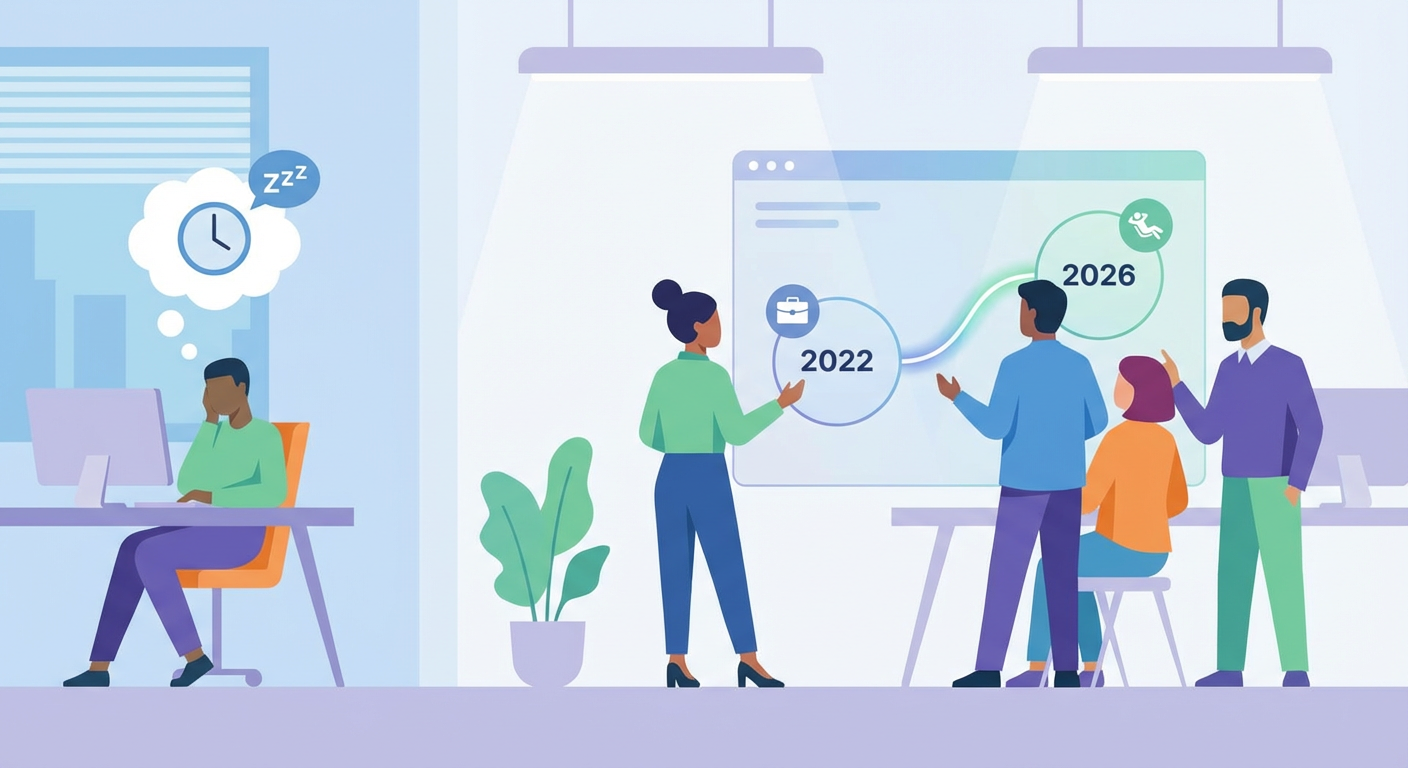
The first crack appeared when “quiet quitting” entered workplace conversations in 2022. Initially, I dismissed it as Gen Z laziness. But the term kept surfacing in discussions four years later, and I started paying attention. Maybe this wasn’t about laziness at all. Maybe it was about people recognizing that grinding yourself into dust isn’t actually productive.

Then came the four-day work week studies. Over sixty companies testing shorter weeks with results showing neutral or positive productivity gains. This wasn’t feel-good fluff. This was data suggesting that working less might actually produce more. My optimization-obsessed brain struggled to process this contradiction.

The final straw was watching my own productivity systems become productivity theater. I spent more time organizing my task management system than actually doing tasks. My elaborate note-taking setup in tools like Obsidian had become digital hoarding. I was optimizing the wrong things entirely.

The Anti-Hustle Backlash Makes Sense

What I initially saw as a productivity backlash, I now understand as a course correction. The World Health Organization recognized burnout as an occupational phenomenon in 2019, giving scientific weight to what many of us were feeling but couldn’t name. We weren’t failing at productivity. Productivity culture was failing us.

Companies like Basecamp started championing anti-meeting cultures, recognizing that calendar Tetris wasn’t collaboration—it was collaboration theater. Meanwhile, millions of people were turning to personal knowledge management tools, not for optimization, but for making sense of information overload. The goal shifted from doing more to understanding better.

The dopamine detox and digital minimalism movements aren’t anti-technology. They’re pro-intentionality. When you step back from the constant stimulation, you realize how much of our “productivity” was just sophisticated procrastination. Paul Graham essays often touch on this—the difference between being busy and making progress.

What Actually Works (And What Doesn’t)

Here’s what I’ve learned after dismantling my productivity shrine: systems matter less than boundaries. The most productive thing I did last year was deleting Slack from my phone. Not upgrading my task manager. Not buying a better planner. Just creating space between me and the expectation of instant availability.

The tools that survived my productivity purge share common traits. They’re simple. They work offline. They don’t gamify my attention or send notifications. My current system would horrify my past self with its simplicity: a basic text editor, a physical notebook, and calendar blocks that protect deep work time like a fortress.

Writers like Cal Newport productivity writing have been ahead of this curve, advocating for deep work over busy work long before the anti-hustle movement had a name. The insight that changed everything for me was realizing that productivity isn’t about doing more things—it’s about doing the right things without distraction.

The Uncomfortable Middle Ground

Admitting I was wrong about productivity doesn’t mean embracing chaos. Structure still matters. Goals still matter. But the relationship changed from master-slave to dance partner. Instead of forcing my life into productivity frameworks, I started building frameworks around my life.

This middle ground feels uncomfortable because it doesn’t offer the certainty of extreme positions. You can’t optimize your way to fulfillment, but you also can’t completely ignore systems and expect coherence. The sweet spot requires constant calibration rather than set-and-forget solutions.

The biggest shift was accepting that some inefficiency is actually efficiency in disguise. Taking walks without podcasts. Having conversations without agendas. Letting ideas marinate instead of forcing them into immediate action. These felt like productivity sins but turned out to be productivity prerequisites.

What’s your relationship with productivity looking like these days? I’m genuinely curious whether others are questioning the optimization obsession or doubling down on it. The comment section is yours—no productivity hacks required, just honest reflection.

Your Brain on Paper: Why Journaling Is the Ultimate Life Hack

The Science Behind Putting Pen to Paper

Your brain literally changes when you journal. Research shows that regular writing reduces cortisol levels and sharpens working memory in ways that typing simply doesn’t match. Something about the physical act of forming letters triggers neural pathways that digital text can’t replicate.

Your Brain on Paper: Why Journaling Is the Ultimate Life Hack

This isn’t feel-good pseudoscience. When you write by hand, you force your brain to slow down and process thoughts differently. The motor skills required for handwriting activate regions that enhance memory formation and emotional regulation. Think of it as meditation with a side effect of documentation.

But here’s what the studies don’t capture: the shift that happens when you stop letting thoughts bounce around your skull like pinballs and start catching them on paper. That’s where things get interesting.

Illustration for Your Brain on Paper: Why Journaling Is the Ultimate Life Hack

From Bullet Points to Big Business

The bullet journal craze has spawned a market worth over $200 million in specialized notebooks, pens, and planning accessories. What started as one designer’s simple system for organizing tasks became a cultural phenomenon that bridges productivity and creativity.

But the real story isn’t the pretty spreads flooding Instagram. It’s that millions of people discovered something: when you design your own system for capturing life, you start paying attention differently. You notice patterns. You spot what matters and what doesn’t.

The bullet journal works because it’s both structure and freedom. You’re not filling in someone else’s predetermined boxes. You’re creating a conversation between your current self and your future self, one dot and dash at a time.

The Therapy-Adjacent Revolution

Scroll through TikTok and you’ll find journaling prompts racking up millions of views. “Write a letter to your inner child.” “List three things you’re proud of this week.” “Describe your ideal day in detail.” These aren’t random feel-good exercises. They’re simplified versions of therapeutic techniques that normally cost $150 per session.

The research on gratitude journaling is particularly strong. Randomized controlled trials show bigger positive effects than almost any other intervention in positive psychology. But the prompts trending on social media go deeper, pushing people toward the kind of self-examination that used to require a therapist’s couch.

This means you can access tools for understanding yourself without gatekeepers or price tags. The catch? You have to show up consistently. No one else can do the work of figuring out your own mind.

Taking Back Your Story From the Algorithm

Personal blogs are quietly making a comeback as people grow tired of performing for algorithms. Platforms like Substack and Ghost host a new wave of long-form personal essays that read more like letters from friends than content designed to go viral.

This shift mirrors what happens in private journaling. When you write without worrying about likes or shares, your authentic voice emerges. You stop optimizing for engagement and start optimizing for truth. The result is writing that feels real because it is real.

Sites like The Marginalian long-form writing prove there’s still hunger for deep, thoughtful exploration of ideas. When you journal regularly, you develop the same muscle for sustained reflection that makes compelling personal writing possible.

The personal blog comeback isn’t just about publishing. It’s about taking back narrative control. Instead of letting social media platforms dictate how you tell your story, you get to decide what matters and how to frame it.

Who This Is Really For

Journaling works best for people who feel scattered or stuck. If you’re the type who lies awake replaying conversations or worrying about decisions, putting those thoughts on paper creates distance and clarity. If you’re going through transitions, processing grief, or trying to figure out what you actually want, journaling gives you a structured way to think through complexity.

This practice particularly helps people who learn by writing. Not everyone processes internally. Some minds need the external act of forming words to understand what they’re thinking. If you’re someone who talks through problems or thinks out loud, journaling can do the same thing when other people aren’t available.

It’s also perfect for people building other habits. James Clear habit building principles work even better when you track not just what you did, but how you felt about it and what you learned. Journaling turns habit formation from mechanical repetition into conscious practice.

But here’s who it’s not for: people looking for quick fixes or external validation. Journaling rewards consistency over intensity and insight over entertainment. If you need immediate results or other people’s approval to stay motivated, this probably isn’t your path.

The beauty of journaling lies in its simplicity and independence. No apps to download, no subscriptions to maintain, no other people required. Just you, some paper, and the radical act of paying attention to your own experience. In a world that profits from your distraction, choosing to focus on your inner landscape becomes both rebellion and refuge.

Start anywhere. Write anything. The page doesn’t care about your handwriting or your grammar. It just wants your attention, and in return, it offers something increasingly rare: a place where your thoughts can exist without judgment, interruption, or the need to perform for anyone but yourself.

The Changed Mind: Personal productivity and the anti-hustle backlash

Here is the thing I keep coming back to on this. The topic of personal productivity and the anti-hustle backlash rewards more careful attention than the typical coverage provides, and the reason is not complicated once you know where to look.

What I find most interesting, and I think you will too, when viewed through the lens of belief update and intellectual honesty, is four-day work week trials showing productivity neutral or positive in 60+ company studies. The intellectually honest read of the situation is also the more accurate one once you examine what the evidence actually shows.

The Changed Mind: Personal productivity and the anti-hustle backlash

The Honesty: Setting the Terms

Quiet quitting coined in 2022 still resonating in 2026 workplace conversations isn’t just a data point in the story of personal productivity and the anti-hustle backlash. It’s the structural condition that makes everything else in this analysis legible. Context like this doesn’t age quickly. The conditions that produced it have been building for years, and the convergence is what makes the current moment distinct from previous moments that looked similar from a distance.

Four-day work week trials showing productivity neutral or positive in 60+ company studies.

Basecamp and Signalvnoise anti-meeting culture gaining traction. Paul Graham essays has been tracking this dimension consistently.

What makes this moment worth examining carefully isn’t the novelty but the confirmation. The underlying dynamics have been visible for some time. What’s new is that they’ve reached a threshold where ignoring them requires active effort rather than simple inattention. That threshold crossing is the event, not the underlying movement that produced it.

And personal knowledge management tools like Obsidian and Notion reaching millions is part of that same picture. These elements don’t exist in separate silos. They’re reinforcing conditions in the same structural shift.

Illustration for The Changed Mind: Personal productivity and the anti-hustle backlash

The Changed Mind: The Analysis

Personal knowledge management tools like Obsidian and Notion reaching millions is where the analysis gets more specific. The surface reading is accessible and not wrong, but it misses the mechanism. And the mechanism is where the practical insight lives. What I find most interesting, and I think you will too, is that the mechanism involves dopamine detox and digital minimalism movements growing as counter-culture. Understanding it changes what you do with the information.

Burnout recognised as occupational phenomenon by WHO since 2019.

The skeptical counterargument deserves honest engagement. Prior moments with similar surface characteristics didn’t produce the outcomes that seemed logical at the time. That history is real. What’s different now is burnout recognised as occupational phenomenon by WHO since 2019, which isn’t a minor variable. It’s the infrastructure condition that previous cycles lacked. Infrastructure changes tend to persist in ways that sentiment-driven changes don’t. Cal Newport productivity writing is one source tracking this dimension with the rigour it requires.

There’s also a distributional question that often goes unaddressed in coverage of personal productivity and the anti-hustle backlash: who captures the value created by these shifts, and who absorbs the disruption costs? The aggregate picture can be positive while the distribution is uneven in ways that matter enormously to specific participants. Keeping that distributional lens in view helps you read the situation clearly rather than simply optimistically.

Implications: What This Means If You Care About Changed beliefs about work

The implications of personal productivity and the anti-hustle backlash extend beyond the immediate context. Quiet quitting coined in 2022 still resonating in 2026 workplace conversations combined with the structural conditions described above creates a situation where adjacent fields, decisions, and communities get affected in ways that aren’t always visible from inside the primary story. The second-order effects are frequently more important than the first-order ones, and they’re where careful attention pays the highest returns.

Distinct individual voice, whatever that person actually sounds like.

The practical question isn’t whether to engage with these dynamics but how. The answer depends on context, on what role you occupy relative to personal productivity and the anti-hustle backlash and what your actual decision horizon is. But the first step is the same regardless: accurate understanding of what’s actually happening rather than what the most available narrative says is happening.

A few concrete observations are worth separating out from the broader analysis. First: four-day work week trials showing productivity neutral or positive in 60+ company studies isn’t a temporary condition. It’s a new baseline. Second: dopamine detox and digital minimalism movements growing as counter-culture suggests that the adjustment period isn’t over. Third, and most important: the organisations and individuals who are treating the current moment as a new steady state rather than a transition are making a categorisation error that will be costly to unwind later.

The Case Against: What the Critics Get Right

Intellectual honesty requires acknowledging the strongest counterarguments, not just the weakest ones. The case against the optimistic reading of personal productivity and the anti-hustle backlash isn’t trivial. There are structural vulnerabilities in the current picture that deserve direct engagement rather than dismissal.

The most serious objection is the one about sustainability. Basecamp and Signalvnoise anti-meeting culture gaining traction can be read not as a foundation but as a ceiling, a point beyond which growth becomes self-limiting because of the very dynamics that produced it. If the current state has already incorporated most of the available supply of early-adopting participants, the remaining growth curve may be structurally shallower than the recent trajectory implies.

Burnout recognised as occupational phenomenon by WHO since 2019.

Looking Forward

The trajectory here is clearer than the pace. Making predictions about when specific thresholds will be crossed is genuinely difficult, and anyone claiming precision about timelines should be treated with scepticism. But the direction, toward quiet quitting coined in 2022 still resonating and continued development of the conditions described above, has support from the evidence in a way that doesn’t depend on a single variable going right.

Burnout recognised as occupational phenomenon by WHO since 2019 is the variable to watch as the leading indicator. Historical patterns suggest it moves first, with broader metrics following with some lag. This doesn’t make the outcome certain, but it makes it legible. And legibility is what you need for good decisions.

Three questions are worth holding as the story develops. First: are the structural conditions that enabled the current state durable, or are they cyclical? Second: who is positioned to benefit from the next phase, and does that differ materially from who benefited in the current phase? Third: what would a clean falsification of the optimistic thesis look like, and is there any evidence of that signal emerging? These questions don’t need answers today, but having asked them changes what you notice in the months ahead.

That’s my read. I want to hear yours.

What have you changed your mind about that you’d be willing to name publicly?

Personal productivity and the anti-hustle backlash: Honest opinion

Here is the thing I keep coming back to on this. The topic of personal productivity and the anti-hustle backlash rewards more careful attention than the typical coverage provides, and the reason is not complicated once you know where to look.

What I find most interesting, and I think you will too, when you look at it honestly, is four-day work week trials showing productivity neutral or positive in 60+ company studies. The willing to be wrong read of the situation is also the more accurate one once you examine what the evidence actually shows.

The Opinion: Setting the Terms

Quiet quitting coined in 2022 still resonates in 2026 workplace conversations. It’s not just a data point in the story of personal productivity and the anti-hustle backlash, it’s the structural condition that makes everything else in this analysis make sense. Context like this doesn’t age quickly. The conditions that produced it have been building for years, and the convergence is what makes the current moment distinct from previous moments that looked similar from a distance.

Four-day work week trials showing productivity neutral or positive in 60+ company studies.

Basecamp and Signal v. Noise’s anti-meeting culture gaining traction. Paul Graham essays has been tracking this dimension consistently.

What makes this moment worth examining carefully is not the novelty but the confirmation. The underlying dynamics have been visible for some time. What’s new is that they have reached a threshold where ignoring them requires active effort rather than simple inattention. That threshold crossing is the event, not the underlying movement that produced it.

And personal knowledge management tools like Obsidian and Notion reaching millions is part of that same picture. These elements don’t exist in separate silos, they’re reinforcing conditions in the same structural shift.

The Unpopular Opinion: The Analysis

Personal knowledge management tools like Obsidian and Notion reaching millions is where the analysis gets more specific. The surface reading is accessible and not wrong, but it misses the mechanism. The mechanism is where the practical insight lives. What I find most interesting, and I think you will too, is that the mechanism is dopamine detox and digital minimalism movements growing as counter-culture. Understanding it changes what you do with the information.

Burnout recognized as occupational phenomenon by WHO since 2019.

The skeptical counterargument deserves honest engagement: prior moments with similar surface characteristics didn’t produce the outcomes that seemed logical at the time. That history is real. What’s different now is burnout recognized as occupational phenomenon by WHO since 2019, which isn’t a minor variable, it’s the infrastructure condition that previous cycles lacked. Infrastructure changes tend to be persistent in ways that sentiment-driven changes are not. Cal Newport productivity writing is one source tracking this dimension with the rigor it requires.

There’s also a distributional question that often goes unaddressed in coverage of personal productivity and the anti-hustle backlash: who captures the value created by these shifts, and who absorbs the disruption costs? The aggregate picture can be positive while the distribution is uneven in ways that matter enormously to specific participants. Keeping that distributional lens in view is part of reading the situation clearly rather than simply optimistically.

Implications: What This Means If You Care About Productivity Culture Critiques

The implications of personal productivity and the anti-hustle backlash extend beyond the immediate context. Quiet quitting coined in 2022 still resonating in 2026 workplace conversations combined with the structural conditions described above creates a situation where adjacent fields, decisions, and communities are affected in ways that aren’t always visible from inside the primary story. The second-order effects are frequently more important than the first-order ones, and they’re where careful attention pays the highest returns.

Distinct individual voice, whatever that person actually sounds like.

The practical question isn’t whether to engage with these dynamics but how. The answer depends on context, on what role you occupy relative to personal productivity and the anti-hustle backlash and what your actual decision horizon is. But the first step is the same regardless: accurate understanding of what’s actually happening rather than what the most available narrative says is happening.

A few concrete observations are worth separating out from the broader analysis. First: four-day work week trials showing productivity neutral or positive in 60+ company studies isn’t a temporary condition, it’s a new baseline. Second: dopamine detox and digital minimalism movements growing as counter-culture suggests that the adjustment period isn’t over. Third, and most important: the organizations and individuals who are treating the current moment as a new steady state rather than a transition are making a categorization error that will be costly to unwind later.

The Case Against: What the Critics Get Right

Intellectual honesty requires acknowledging the strongest counterarguments, not just the weakest ones. The case against the optimistic reading of personal productivity and the anti-hustle backlash isn’t trivial. There are structural vulnerabilities in the current picture that deserve direct engagement rather than dismissal.

The most serious objection is the one about sustainability. Basecamp and Signal v. Noise’s anti-meeting culture gaining traction can be read not as a foundation but as a ceiling, a point beyond which growth becomes self-limiting because of the very dynamics that produced it. If the current state has already incorporated most of the available supply of early-adopting participants, the remaining growth curve may be structurally shallower than the recent trajectory implies.

Burnout recognized as occupational phenomenon by WHO since 2019.

Looking Forward

The trajectory here is clearer than the pace. Making predictions about when specific thresholds will be crossed is genuinely difficult, and anyone claiming precision about timelines should be treated with skepticism. But the direction, toward quiet quitting coined in 2022 still resonating in workplace culture and continued development of the conditions described above, is supported by the evidence in a way that isn’t contingent on a single variable going right.

Burnout recognized as occupational phenomenon by WHO since 2019 is the variable to watch as the leading indicator. Historical patterns suggest it moves first, with broader metrics following with some lag. This doesn’t make the outcome certain, but it makes it legible, and legibility is the precondition for good decisions.

Three questions are worth holding as the story develops. First: are the structural conditions that enabled the current state durable, or are they cyclical? Second: who is positioned to benefit from the next phase, and does that differ materially from who benefited in the current phase? Third: what would a clean falsification of the optimistic thesis look like, and is there any evidence of that signal emerging? These questions don’t need answers today, but having asked them changes what you notice in the months ahead.

That’s my read. I want to hear yours.

Make the case against this. I genuinely want to hear it.

Personal productivity and the anti-hustle backlash: Belief update and intellectual honesty

Here is the thing I keep coming back to on this. The topic of personal productivity and the anti-hustle backlash rewards more careful attention than the typical coverage provides, and the reason is not complicated once you know where to look.

What I find most interesting, and I think you will too, when you look at belief update and intellectual honesty, is four-day work week trials showing productivity neutral or positive in 60+ company studies. The intellectually honest read of the situation is also the more accurate one once you examine what the evidence actually shows.

Personal productivity and the anti-hustle backlash: Belief update and intellectual honesty

The Honesty: Setting the Terms

Quiet quitting, coined in 2022, still echoes through workplace conversations in 2026. This isn’t just another data point in the story of personal productivity and the anti-hustle backlash. It’s the structural condition that makes everything else in this analysis make sense. Context like this doesn’t age quickly. The conditions that produced it have been building for years. The convergence is what makes this moment different from previous moments that looked similar from a distance.

Four-day work week trials showing productivity neutral or positive in 60+ company studies.

Basecamp and Signalvnoise anti-meeting culture gaining traction. Paul Graham essays has been tracking this dimension consistently.

What makes this moment worth examining carefully isn’t the novelty but the confirmation. The underlying dynamics have been visible for some time. What’s new is that they’ve reached a threshold where ignoring them requires active effort rather than simple inattention. That threshold crossing is the event, not the underlying movement that produced it.

Personal knowledge management tools like Obsidian and Notion reaching millions is part of that same picture. These elements don’t exist in separate silos. They’re reinforcing conditions in the same structural shift.

The Changed Mind: The Analysis

Personal knowledge management tools like Obsidian and Notion reaching millions is where the analysis gets more specific. The surface reading is accessible and not wrong, but it misses the mechanism. The mechanism is where the practical insight lives. What I find most interesting, and I think you will too, is the mechanism of dopamine detox and digital minimalism movements growing as counter-culture. Understanding it changes what you do with the information.

Burnout has been recognized as an occupational phenomenon by WHO since 2019.

The skeptical counterargument deserves honest engagement: prior moments with similar surface characteristics didn’t produce the outcomes that seemed logical at the time. That history is real. What’s different now is burnout being recognized as an occupational phenomenon by WHO since 2019, which isn’t a minor variable. It’s the infrastructure condition that previous cycles lacked. Infrastructure changes tend to be persistent in ways that sentiment-driven changes are not. Cal Newport productivity writing is one source tracking this dimension with the rigor it requires.

There’s also a distributional question that often goes unaddressed in coverage of personal productivity and the anti-hustle backlash: who captures the value created by these shifts, and who absorbs the disruption costs? The aggregate picture can be positive while the distribution is uneven in ways that matter enormously to specific participants. Keeping that distributional lens in view is part of reading the situation clearly rather than simply optimistically.

Implications: What This Means If You Care About Changed beliefs about work

The implications of personal productivity and the anti-hustle backlash extend beyond the immediate context. Quiet quitting coined in 2022 still resonating in 2026 workplace conversations combined with the structural conditions described above creates a situation where adjacent fields, decisions, and communities are affected in ways that aren’t always visible from inside the primary story. The second-order effects are frequently more important than the first-order ones, and they’re where careful attention pays the highest returns.

Distinct individual voice, whatever that person actually sounds like.

The practical question isn’t whether to engage with these dynamics but how. The answer depends on context, on what role you occupy relative to personal productivity and the anti-hustle backlash and what your actual decision horizon is. But the first step is the same regardless: accurate understanding of what’s actually happening rather than what the most available narrative says is happening.

A few concrete observations are worth separating out from the broader analysis. First: four-day work week trials showing productivity neutral or positive in 60+ company studies isn’t a temporary condition. It’s a new baseline. Second: dopamine detox and digital minimalism movements growing as counter-culture suggests that the adjustment period isn’t over. Third, and most important: the organizations and individuals who are treating the current moment as a new steady state rather than a transition are making a categorization error that will be costly to unwind later.

The Case Against: What the Critics Get Right

Intellectual honesty requires acknowledging the strongest counterarguments, not just the weakest ones. The case against the optimistic reading of personal productivity and the anti-hustle backlash isn’t trivial. There are structural vulnerabilities in the current picture that deserve direct engagement rather than dismissal.

The most serious objection is the one about sustainability. Basecamp and Signalvnoise anti-meeting culture gaining traction can be read not as a foundation but as a ceiling, a point beyond which growth becomes self-limiting because of the very dynamics that produced it. If the current state has already incorporated most of the available supply of early-adopting participants, the remaining growth curve may be structurally shallower than the recent trajectory implies.

Burnout recognized as occupational phenomenon by WHO since 2019.

Looking Forward

The trajectory here is clearer than the pace. Making predictions about when specific thresholds will be crossed is genuinely difficult, and anyone claiming precision about timelines should be treated with skepticism. But the direction, toward quiet quitting coined in 2022 still resonating and continued development of the conditions described above, is supported by the evidence in a way that doesn’t depend on a single variable going right.

Burnout recognized as occupational phenomenon by WHO since 2019 is the variable to watch as the leading indicator. Historical patterns suggest it moves first, with broader metrics following with some lag. This doesn’t make the outcome certain, but it makes it readable. And readability is what you need for good decisions.

Three questions are worth holding as the story develops. First: are the structural conditions that enabled the current state durable, or are they cyclical? Second: who is positioned to benefit from the next phase, and does that differ materially from who benefited in the current phase? Third: what would a clean falsification of the optimistic thesis look like, and is there any evidence of that signal emerging? These questions don’t need answers today, but having asked them changes what you notice in the months ahead.

That’s my read. I want to hear yours.

What have you changed your mind about that you’d be willing to name publicly?