The Great Workplace Rebellion Has a Productivity Problem
The term “quiet quitting” entered our vocabulary in 2022, and four years later, it’s still dominating workplace discussions. Workers are drawing boundaries, rejecting overtime culture, and doing the bare minimum required by their job descriptions. Meanwhile, companies are experimenting with four-day work weeks, with over 60 studies showing either neutral or positive productivity outcomes. This sounds like a win-win situation, right?
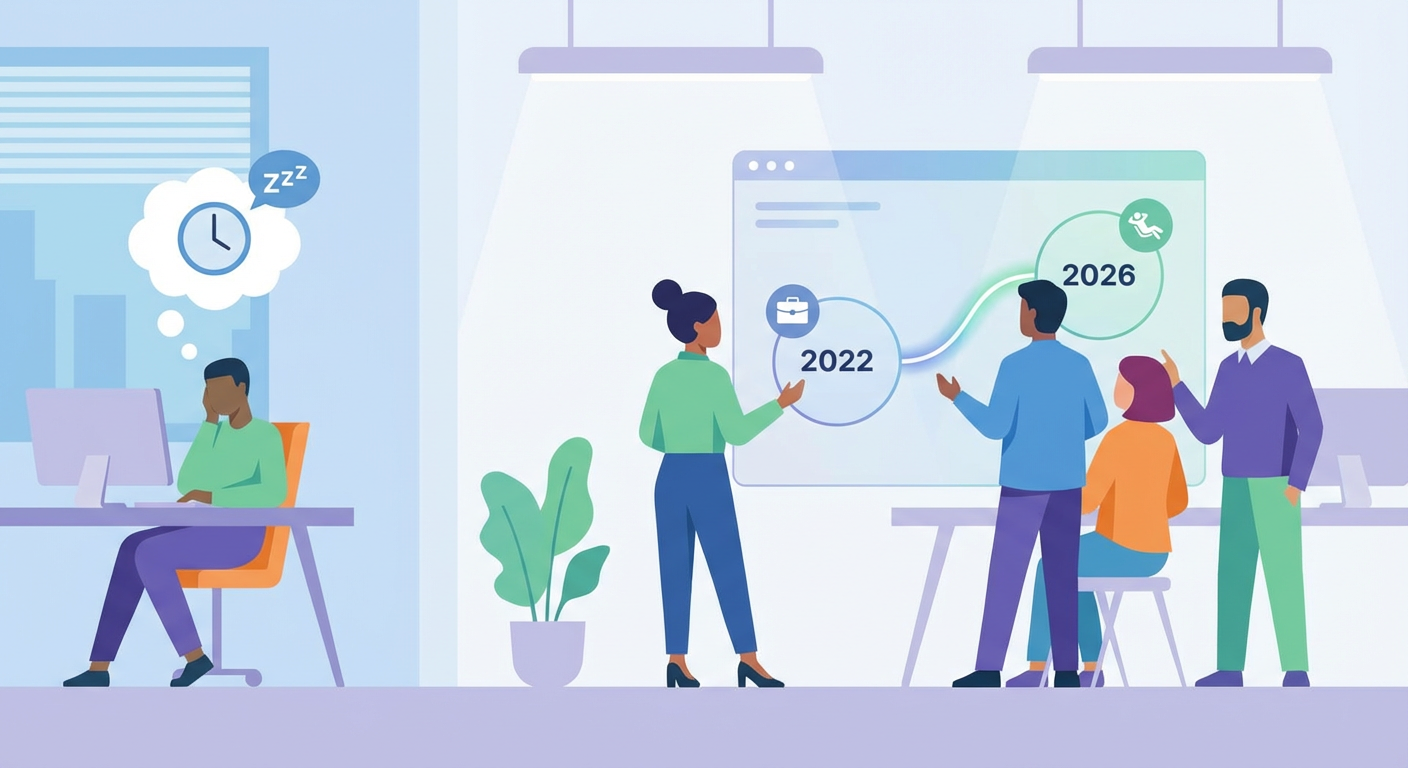
Wrong. We’re solving the wrong problem entirely.
The anti-hustle movement has created a false choice between grinding yourself into dust and phoning it in. We’ve swung from toxic productivity culture straight into productivity nihilism. Both extremes miss what actually matters: doing meaningful work effectively without destroying your life in the process.
The Meeting-Free Mirage and Other Band-Aid Solutions
Companies like Basecamp have built their entire brand around anti-meeting culture, and Signal v. Noise has turned “no meetings” into a rallying cry for workplace reformers. This approach feels revolutionary until you realize it’s treating symptoms rather than causes. The problem isn’t meetings themselves. It’s that most organizations have no idea what they’re trying to accomplish.
When you eliminate meetings without replacing them with better communication structures, you don’t get productivity. You get isolation, misalignment, and passive-aggressive Slack threads that accomplish nothing. The Cal Newport productivity writing movement understands this: the goal isn’t to eliminate collaboration, but to make it intentional and effective.
Similarly, the explosion of personal knowledge management tools like Obsidian and Notion, now used by millions, represents another well-intentioned misstep. These tools promise to organize your thoughts and streamline your workflow, but they often become elaborate procrastination devices. You spend more time perfecting your note-taking system than actually creating anything worthwhile.
Digital Minimalism as Productivity Theater
The dopamine detox and digital minimalism movements have gained serious momentum as counter-culture responses to always-on technology. Advocates delete social media apps, buy flip phones, and practice digital sabbaths. These approaches feel virtuous and often provide temporary relief from information overload.
But here’s the uncomfortable truth: most people using these techniques are running from the real challenge of building focus and attention. Deleting Instagram is easier than developing the discipline to use it mindfully. Buying a flip phone is simpler than learning to manage smartphone notifications intelligently.
The World Health Organization recognized burnout as an occupational phenomenon in 2019, giving official credibility to what workers had been experiencing for decades. This recognition was necessary and overdue. However, it’s led to treating burnout as an individual problem requiring individual solutions (meditation apps, digital detoxes, and wellness programs) rather than addressing systemic workplace dysfunction.
What Actual Productivity Looks Like in Practice
Real productivity isn’t about optimizing every minute or eliminating all friction from your day. It’s about consistently making progress on things that matter while maintaining your sanity and relationships. This requires three elements that both hustle culture and anti-hustle culture systematically ignore.
First, you need clarity about what you’re trying to accomplish. Not productivity for its own sake, but productivity in service of specific, meaningful goals. The Paul Graham essays on maker vs. manager schedules illustrate this perfectly. Different types of work require different approaches to time and attention.
Second, you need systems that work with your psychology rather than against it. This means understanding your energy patterns, building sustainable habits, and creating environments that support focused work. It’s less glamorous than either grinding 16-hour days or posting about your digital detox, but it’s infinitely more effective.
Third, you need boundaries that protect what matters without becoming rigid rules that prevent adaptation. The four-day work week trials succeed not because everyone works less, but because teams become more intentional about how they spend their time.
Beyond the Productivity Culture Wars
The real issue isn’t whether you’re team hustle or team anti-hustle. It’s that we’ve turned productivity into an identity rather than treating it as a skill. Your worth as a person isn’t determined by your output, but your ability to get important things done efficiently affects every area of your life.
The most productive people I know don’t fit neatly into either camp. They work intensely on projects they care about, then take real breaks. They use technology strategically rather than avoiding it entirely. They’ve learned to say no to good opportunities so they can say yes to great ones.
This approach requires more nuance than either “optimize everything” or “reject all optimization.” It means developing judgment about when to push hard and when to ease up, which tools actually help versus which ones create busywork, and how to maintain focus without becoming obsessive.
Maybe the real productivity hack is admitting that there are no productivity hacks. Just the ongoing work of figuring out how to spend your limited time and energy on things that actually matter. What’s your experience been with finding that balance?